INGREDIENT GUIDE
Colostrum
Composition, Processing & the Evidence Behind Its Use
Colostrum is the first mammary secretion produced around birth. This guide focuses on bovine colostrum, collected from cows and used as a food or supplement ingredient, rather than advice about human breastfeeding or newborn feeding. Its mixture of proteins, antibodies, fats and carbohydrates differs from mature milk, but the composition of a commercial preparation also depends on collection timing and processing. A liquid, a dried powder and a concentrated fraction are therefore not necessarily interchangeable.
Source referenced
Processing explained
Evidence separated from claims
Colostrum at a glance
01 / INGREDIENT
What is Colostrum
The mammary gland begins preparing this secretion before birth, a process called colostrogenesis. After calving, the early secretion gradually transitions towards mature milk. It generally contains more protein and immunoglobulins, and less lactose, than established milk; quantities change rapidly rather than following one fixed recipe.
Human and bovine colostrum share broad constituent classes but differ in their proportions and biological context. In calves, early antibody uptake is central to passive transfer. That neonatal process is not evidence that an adult taking a supplement acquires the same systemic protection. Dairy herds provide a practical commercial source, but collection history and natural variability remain important.
Researchers have investigated colostrum in areas including intestinal permeability, respiratory symptoms during exercise training and sports performance. Understanding those studies requires more than reading a headline about potential benefits: the preparation, amount, participants and outcome all matter. The following sections explain the biology, manufacturing methods, quality measurements and limits of human evidence, helping you read an ingredient specification without confusing a promising research finding with a proven product effect.
02 / COMPOSITION
What does bovine colostrum contain?
It is a complex food material, not purified IgG. Research on its composition describes the following groups. The table explains their identity, not guaranteed amounts in every supplement.
|
Constituent |
What it means |
|---|---|
|
Immunoglobulins |
Antibody proteins. IgG predominates in the bovine secretion; IgA and IgM are also present. |
|
Casein and whey proteins |
Major protein fractions, including alpha-lactalbumin and beta-lactoglobulin. |
|
Lactoferrin and enzymes |
Lactoferrin binds iron. Lactoperoxidase and lysozyme are among the proteins studied for biological activity. |
|
Growth factors and cytokines |
Signalling molecules, including IGF-1, IGF-2 and TGF-beta, studied in developmental and laboratory contexts. |
|
Other constituents |
Fat, lactose, oligosaccharides, vitamins and minerals contribute to the wider composition. |
Finding a molecule in the starting material does not establish how much remains after processing, survives digestion or produces a measurable human effect. “Bioactive” describes an observed biological activity in a particular context; it is not a blanket clinical guarantee.
03 / COLLECTION
From cow to colostrum ingredient

Bovine source · cow and calf
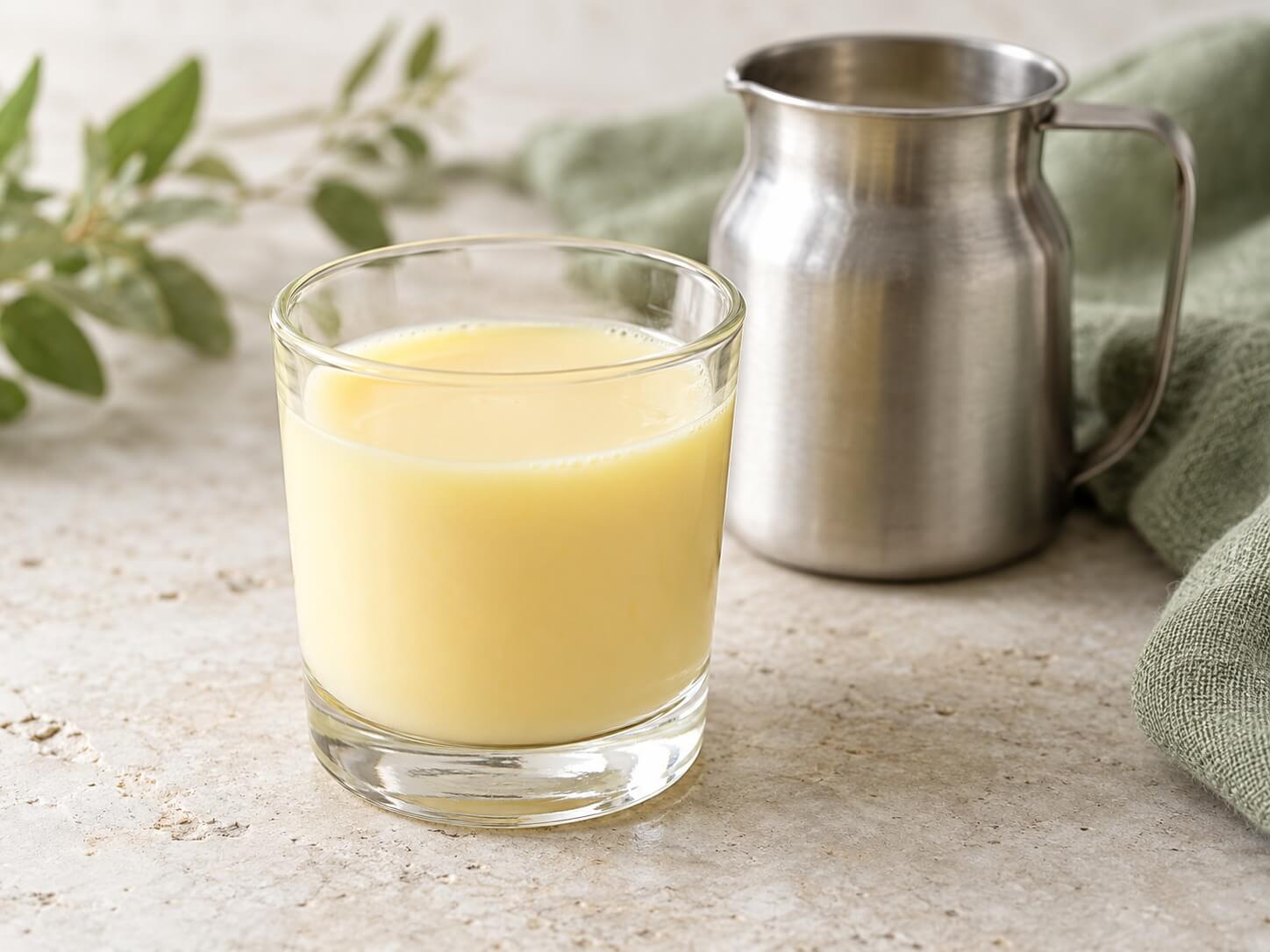
Liquid form · illustrative appearance
Dried form · illustrative appearance
First milking and later collections can differ substantially. Timing after calving, the animal’s characteristics and farm management affect the starting material. “Collected within the first days” is therefore less precise than a documented milking and collection window.
The calf’s needs must be addressed before material is diverted into human food production. A supplier’s sourcing policy should explain this allocation rather than relying on a pastoral photograph. Clean collection equipment, animal health controls and traceability matter throughout the supply chain.
Fresh colostrum needs controlled handling. Commercial production routes may involve freezing at the farm and transport to a processing facility. Cooling or freezing helps preservation but does not itself provide the pathogen reduction of a validated treatment. The history before processing is part of quality, not merely a logistical detail.
04 / PROCESSING
How bovine colostrum is processed
Colostrum processing balances microbiological safety, ingredient function and storage stability. Routes vary; the steps below describe possibilities, not a recipe used by every producer.
05 / FORMS & TERMINOLOGY
Liquid, powder and supplement forms
Roman numerals identify members of this protein family with different structures and tissue distributions. They are not quality grades.
Liquid
A fluid preparation. Its concentration, preservation method and storage instructions need checking separately.
Powder
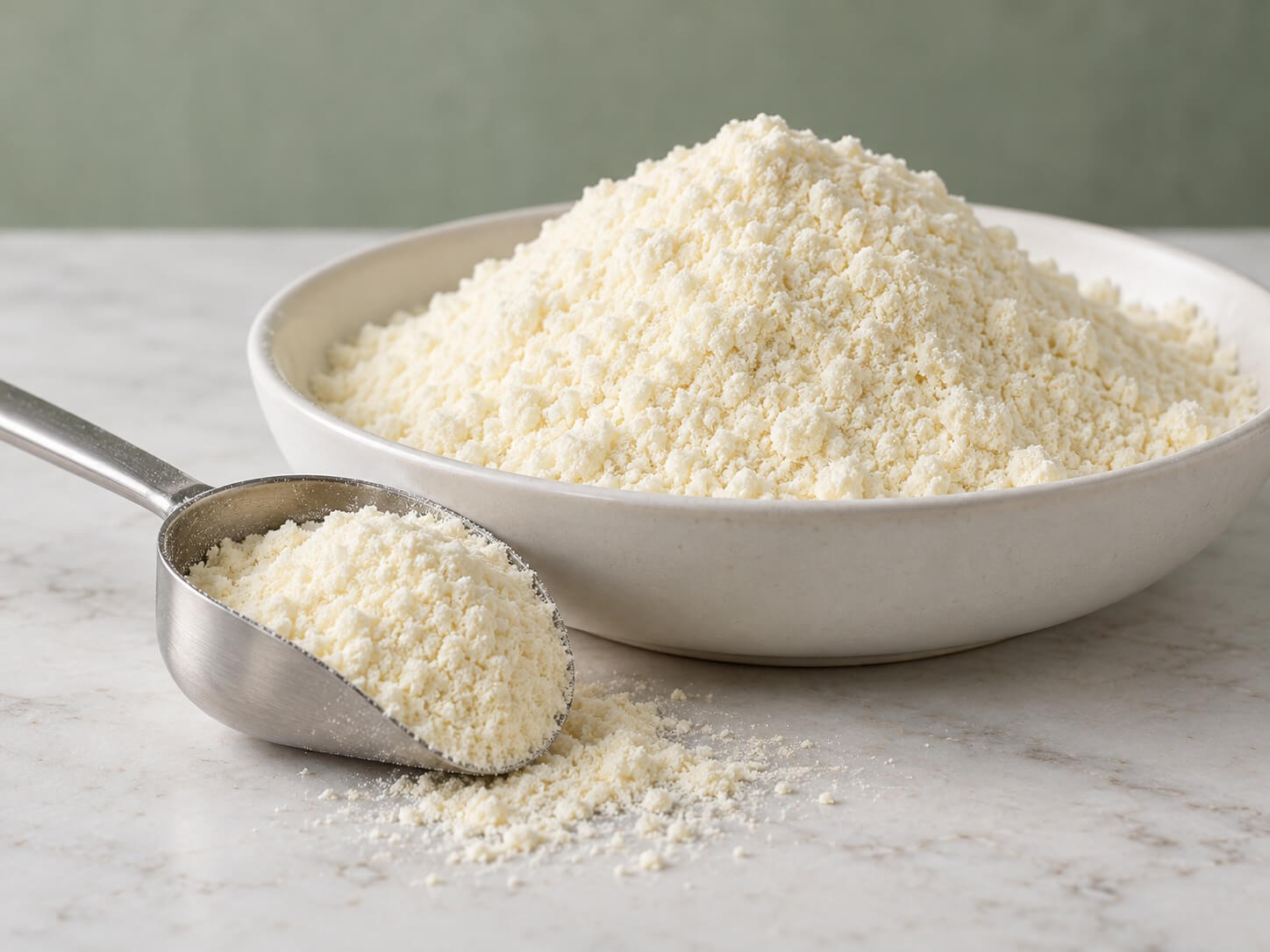
A dried colostrum ingredient that may be whole, defatted or fractionated. Drying concentrates solids by removing water.
Capsules
A measured portion of dry material enclosed in a shell. Shell ingredients and other additives remain relevant.
Other formats
Sachets, tablets and food formulations may contain the same broad ingredient in different amounts.
“Bovine” identifies the source. “Colostrum powder” describes a processed form. “Colostrum supplement” describes a finished product category. Neither a scoop size nor a bottle volume tells you the amount of dry ingredient or IgG without further information.
Frozen colostrum is another storage form, not a separate biological substance. Food applications also depend on taste, texture and compatibility with the recipe. Format can affect convenience, but it does not independently prove absorption or effectiveness.
Freeze-drying may preserve some sensitive constituents well, but a process name cannot establish superior clinical results. Equally, spray-drying does not mean that every antibody has been destroyed. Compare measured specifications and validated controls, not just marketing descriptions.
06 / SCIENTIFIC EVIDENCE
What has human research investigated?
Composition studies establish what colostrum contains. Cell experiments and animal studies explore possible mechanisms. Human observational studies can identify associations, whereas randomised trials test defined interventions against a comparator. Systematic reviews bring trials together, but cannot remove weaknesses in the underlying research.
When reading a result, ask whether the difference was meaningful to participants, not only statistically significant. A change in a laboratory marker and an improvement in daily symptoms are different outcomes. Also check whether the outcome was planned in advance, whether the comparison group received a similar amount of protein, and how many people completed the study. These details help explain why an encouraging headline can still lead to a cautious conclusion. Evidence should become more convincing through independent, consistent findings, rather than through repeated descriptions of the same small trial.
Gut barrier and intestinal permeability
A 2024 meta-analysis of randomised trials found reductions in some urinary sugar-ratio measures of permeability. Results differed by test: heterogeneity was extremely high for one pooled ratio. Such measurements are indirect outcomes, not proof that a person feels better or that a digestive disease has been treated.
A 2025 sports-nutrition position statement describes inconsistent findings from exercise studies of colostrum, including trials without beneficial effects under more demanding exercise or heat conditions. Differences in exercise protocols, sampling times and preparations make a universal “repairs leaky gut” claim inappropriate.
Respiratory symptoms and immune markers
A 2016 review of five trials involving 152 participants reported fewer respiratory symptom days and episodes during exercise training. The studies used 10–20 g of colostrum daily over roughly 8–12 weeks. Four trials had moderate or high overall risk of bias, largely because methods were incompletely reported.
Symptoms were self-reported rather than confirmed infections. Results about symptom diaries therefore cannot establish protection against viruses. A separate meta-analysis of immune outcomes found no or relatively little effect on several blood and salivary measures. Different endpoints should not be combined into a broad “boosts immunity” promise.
Performance and body composition
A randomised trial published online in 2025 studied 29 club-level rugby players taking 38 g of colostrum daily for eight weeks against soy protein. Vertical jump improved, but strength, aerobic power, body composition, salivary markers and reported illness did not show comparable benefits. One positive outcome among several measurements requires cautious interpretation.
This illustrates why a sports-performance result is not a general muscle-building or weight-loss recommendation. Training, comparator protein and participant characteristics are part of the intervention context.
Gastrointestinal research and uncertainty
A 2024 systematic review of gastrointestinal applications included diverse populations and preparations, including specialised hyperimmune colostrum. Differences in doses, outcomes and participants prevented a pooled meta-analysis. These studies should not be presented as proof that any retail supplement treats digestive symptoms.
A broader review of human applications likewise identified substantial study diversity. Small samples, short follow-up and inconsistent preparation descriptions limit confidence. Research quantities are not personal dosage advice, and a result with one colostrum preparation cannot be assumed for another product.
07 / RESEARCH & HEALTH CLAIMS
Scientific findings are not health claims
A colostrum study reports an outcome under particular conditions; it does not automatically authorise a statement in food marketing. The EU health claims register lists authorised and non-authorised claims and their conditions. For England, Scotland and Wales, consult the Great Britain register; Northern Ireland follows the applicable EU framework.
Authorisation relates to the specified substance, wording and conditions of use. It cannot be inferred from a supplier’s study list. This guide therefore discusses investigated outcomes without promising infection prevention, disease treatment or gut healing. Even a positive result needs to match the preparation, amount, population and endpoint before a meaningful comparison is possible.
08 / QUALITY
What defines colostrum quality?
Quality has several dimensions: identity, consistency, microbial control, composition and suitability for the intended use. A well-described specification is more useful than an unexplained “premium” grade.
IgG concentration is one useful marker. However, measurement methods and sample characteristics affect interpretation. Ask whether a percentage relates to dry matter or the supplied product, which analytical method was used, and whether it describes a batch result or a minimum specification.
Brix refractometry estimates refractive properties associated with dissolved solids. A systematic review in dairy husbandry examined its ability to screen first milk for IgG concentration. It is an indirect screen, not an antibody assay or a measure of supplement efficacy. Thresholds developed for calf feeding should not be transferred to human health outcomes.

For a finished colostrum preparation, also consider documented microbiological testing, storage conditions, collection records, added carriers and batch traceability. Standardisation can improve consistency in a declared component; it does not ensure that every other component or clinical effect is identical.
09 / WHAT TO COMPARE
Reading a colostrum supplement label
Begin with the ingredient declaration, then check the serving rather than the front-of-pack headline:
Source and identity: confirm bovine origin and any stated whole, defatted or concentrated form.
Actual amount: distinguish the amount of colostrum from capsule weight, total powder weight or liquid volume.
IgG information: look for units, measurement basis and whether the declaration applies to the daily serving.
Complete formula: check carriers, flavourings, sweeteners, shell materials and milk allergen information.
For example, a hypothetical 1 g serving containing 20% IgG would provide 200 mg if that percentage refers to the supplied ingredient. It would not prove greater benefit than a different preparation. This calculation is a label-reading example, not a recommended amount or an LR specification.
10 / SAFETY & LIMITATIONS
Safety and important limitations
Colostrum is a dairy-derived ingredient and is unsuitable for vegans. Milk-protein allergy requires particular care: removing lactose or fat does not remove the milk proteins responsible for allergy. A lactose-free description should never be interpreted as milk-allergen-free.
Lactose intolerance is different. The amount remaining depends on processing and formulation, while tolerance varies between individuals. Check the actual label rather than assuming that a small capsule or dried powder contains none.
Adult colostrum trials do not establish suitability during pregnancy, breastfeeding or childhood, and long-term evidence remains limited. If considering use in these circumstances, or with a medical condition or prescribed treatment, discuss the complete product with an appropriate healthcare professional. Clinical research preparations and retail supplements are not interchangeable, and this guide does not provide a treatment plan.
11 / MISCONCEPTIONS
Common colostrum misunderstandings
“It is just ordinary milk.”
Its early-lactation composition differs, particularly in antibody and protein content. That distinction does not itself demonstrate an adult health benefit.
“More IgG means better results.”
A concentration describes composition. Human outcomes need evidence for the actual preparation and amount.
“Freeze-dried means clinically superior.”
A drying method can influence retained components. It cannot replace a direct comparison of human outcomes.
12 / QUESTIONS
Colostrum FAQ
THE KEY POINTS
Key takeaweys
Colostrum is a complex dairy ingredient whose composition depends on its source, collection timing and processing. Liquid preparations, dried powders and capsules describe different forms, but their appearance alone tells you little about their composition or comparability.
When comparing preparations, look for clearly stated ingredient amounts, relevant composition data and transparent processing information. The most useful evidence relates to the preparation being discussed. Clear specifications help distinguish what a product contains from what research has actually demonstrated.
FURTHER PRODUCT CONTEXT
Colostrum formats available from LR
LR’s German Nutrition Product Manual documents capsule and liquid formats. These are presentation choices within a finished formulation, not evidence that either reproduces an unrelated clinical trial.
For product-specific details, find the LR Select guides to Cow Colostrum Capsules and Bovine Colostrum Liquid Supplement. Check the current country-specific label for composition, serving and storage.
Health information: General educational information, not individual medical advice. Ingredient and laboratory images are AI-generated illustrations, not evidence of product purity, testing or clinical performance.