PRODUCT COMPARISON
Colostrum Liquid vs Capsules: What’s the Difference?
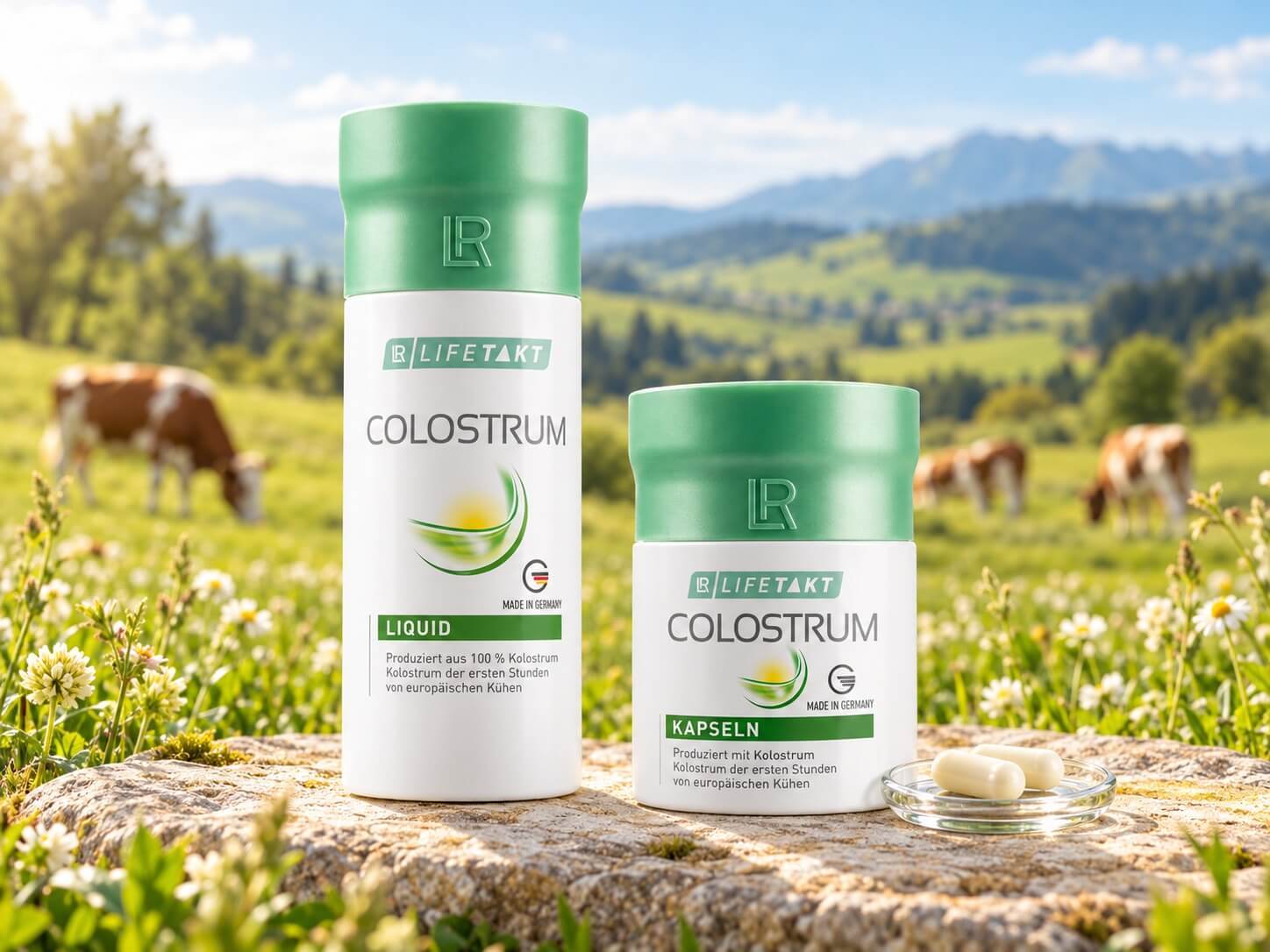
Colostrum liquid vs capsules is largely a question of formulation and how you prefer to take bovine colostrum. LR Colostrum Liquid is a ready-to-drink preparation made from defatted, decaseinated cow colostrum, while LR Colostrum Capsules contain defatted, freeze-dried colostrum powder inside a capsule shell.
The liquid comes in a 125 ml container with an 8 ml daily serving; the capsules come in a pack of 60, providing 800 mg of colostrum powder per two-capsule daily serving. Both use colostrum from European cows, but their ingredients, processing and storage instructions differ. This comparison explains those practical details without assuming that one form produces better health results.
Quick answer
When choosing colostrum liquid vs capsules, consider how you prefer to take it: LR Colostrum Liquid offers an 8 ml drinkable daily measure without a capsule shell and requires refrigeration after opening. If you prefer individual portions, LR Colostrum Capsules provide two capsules daily and are stored cool and dry. The liquid is decaseinated and cold-processed; the capsule powder is freeze-dried. Their declared quantities are expressed in different units, so they should not be compared as equivalent doses.
Colostrum liquid vs capsules at a glance
Key recipe differences · German formulas, per the LR product manual
|
Comparison |
LR Colostrum Liquid |
LR Colostrum Capsules |
|---|---|---|
|
Format |
Ready-to-drink liquid |
Colostrum powder in capsules |
|
Pack size |
125 ml |
60 capsules / 30.9 g total pack weight |
|
Manufacturer’s daily serving |
8 ml once a day |
One capsule twice a day (two total) |
|
Declared colostrum amount |
8 ml of finished liquid per daily serving; colostrum mass not stated |
800 mg of defatted colostrum powder per two-capsule daily serving |
|
Additional ingredients |
None listed on reviewed LR liquid page |
Gelatine capsule and anti-caking agent in reviewed German ingredient listing; confirm current label |
|
Processing described |
Cold processing, fat and casein removal, without pasteurisation |
Defatting and gentle freeze-drying; casein-removal claim not verified for capsules |
|
Storage |
Cool, dark place; refrigerate once opened |
Cool, dry place |
The liquid’s volume and the capsules’ powder mass cannot be converted into a meaningful like-for-like colostrum dose without verified product-specific composition data. The 30.9 g capsule pack weight includes more than the colostrum powder.
In this article: Product overview | What they share | Key differences | Full table | Ingredients | Processing | Serving & storage | Quality | Science | Before choosing | FAQs | Where to buy
Meet the two LR colostrum products
Both are based on bovine colostrum, the first milk produced by a cow after calving. The colostrum liquid vs capsules comparison centres on two distinct ways to consume this ingredient.
01 / LIQUID
LR Colostrum Liquid
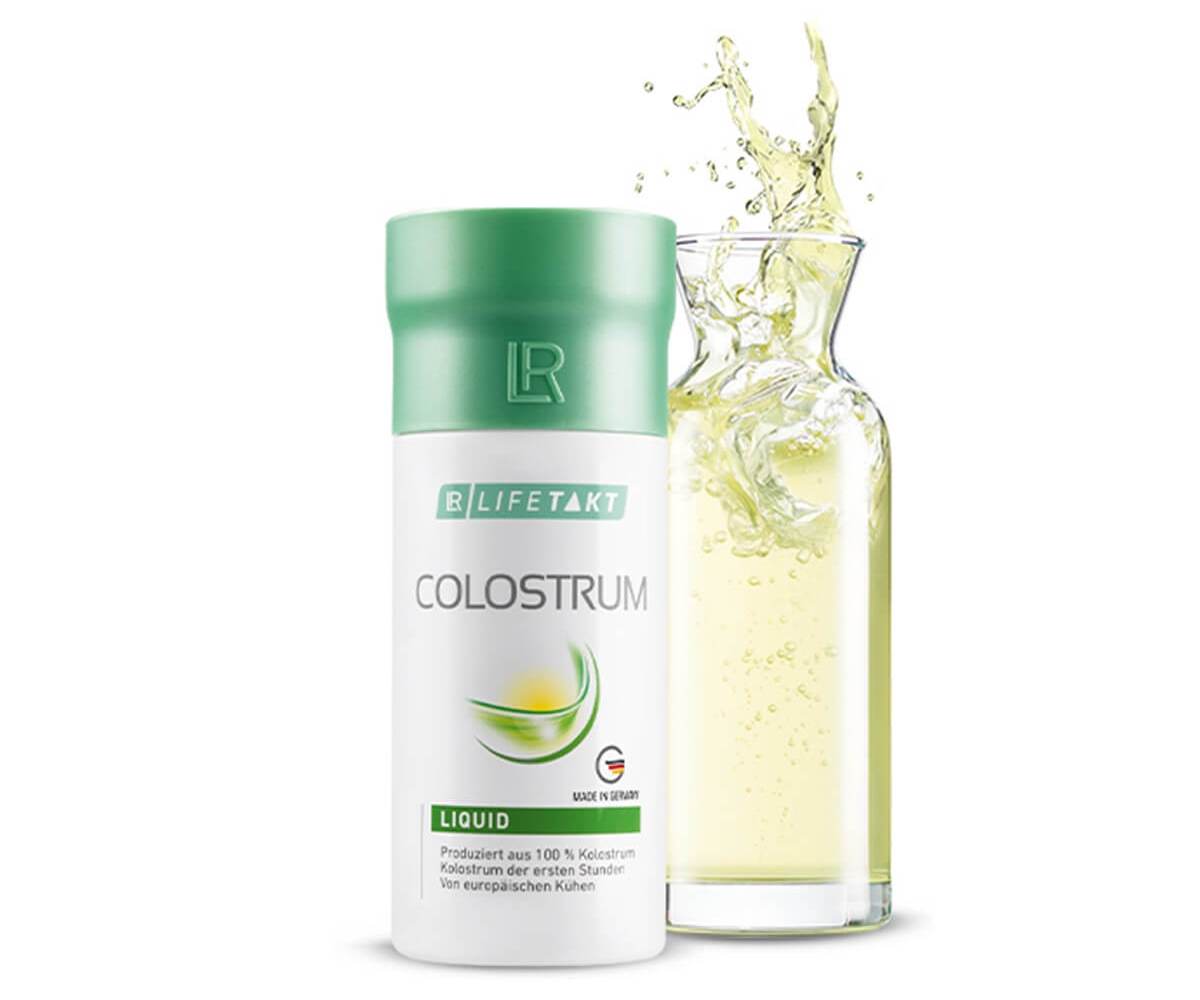
The ready-to-drink formula lists defatted, decaseinated cow colostrum as its sole ingredient, without added colourings or preservatives. The 125 ml container has a marked measuring cap.
LR recommends an 8 ml daily portion, taken neat or with cold fruit juice. Refrigerate after opening.
02 / CAPSULES
LR Colostrum Capsules
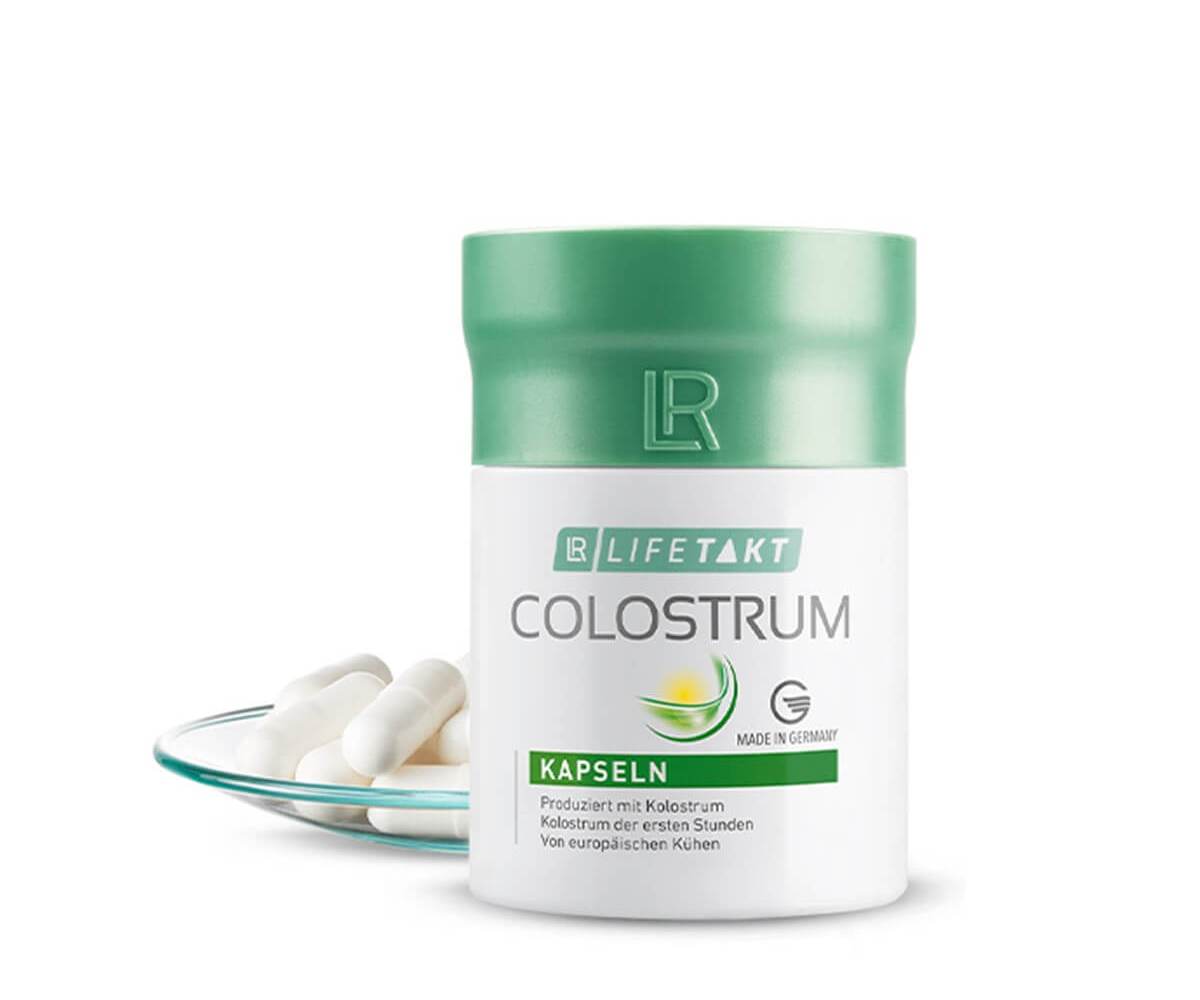
The capsules contain defatted, freeze-dried colostrum powder inside a gelatine shell, with an anti-caking agent in the reviewed German ingredient list.
Each 60-capsule pack provides 30 daily portions of two capsules, containing 800 mg colostrum powder per portion.
What they have in common
The same type of starting material
The starting material is a shared feature in this colostrum liquid vs capsules comparison: according to LR, both use surplus bovine first milk from European cows and are manufactured in Germany.
Documented quality controls
LR describes raw-material and production checks for both products and links them to the SGS Institut Fresenius quality programme. Current certificate validity is a separate verification point.
Colostrum liquid vs capsules: key differences
01 / FORMAT
Drinkable versus pre-portioned
The liquid is measured in millilitres; capsules are counted individually. Choose whichever format suits your handling preference.
02 / FORMULA
Liquid ingredient versus capsule blend
The liquid lists only processed colostrum; the reviewed German capsule formula also includes a gelatine shell and anti-caking agent.
03 / PROCESSING
Cold-processed versus freeze-dried
LR describes casein removal and cold processing for the liquid, and defatting plus freeze-drying for the capsules.
04 / HANDLING
Refrigeration after opening
After opening, liquid needs refrigeration and has a stated 16-day use window in German guidance. Capsules are kept cool and dry.
Side-by-side comparison table
This colostrum liquid vs capsules table compares both products using the same criteria. “Not stated” means the reviewed manufacturer material did not give a comparable value.
|
Comparison |
LR Colostrum Liquid |
LR Colostrum Capsules |
|---|---|---|
|
FormPrimary ingredientat |
Defatted, decaseinated cow colostrum |
Defatted cow colostrum powder |
|
Other listed ingredients |
No added ingredients stated |
Gelatine; magnesium salts of fatty acids as anti-caking agent (reviewed DE listing) |
|
Processing |
Cold processing; not pasteurised |
Gentle freeze-drying |
|
Daily serving basis |
8 ml of finished liquid |
2 capsules containing 800 mg colostrum powder |
|
Approximate servings per pack |
15 full daily servings, plus 5 ml remainder (calculated) |
30 daily servings (calculated) |
|
Serving instructions |
Take neat or with cold fruit juice |
Swallow one capsule morning and evening with water |
|
Storage |
Cool/dark unopened; chilled after opening |
Cool/dry |
|
Declared IgG amount |
Not stated in reviewed product data |
Not stated in reviewed product data |
Calculations: 125 ml ÷ 8 ml = 15.625 portions (15 complete portions and 5 ml left); 60 capsules ÷ 2 per day = 30 daily portions. These are pack-count calculations, not a recommendation to extend the liquid’s after-opening shelf life.
Colostrum liquid vs capsules: ingredients and formula
What is in the liquid?
LR lists defatted, decaseinated bovine colostrum as the liquid’s only ingredient. It contains no separate shell, colouring or preservative in the reviewed formula. Decaseination does not establish suitability for people with milk allergy.
The 8 ml portion refers to finished liquid; LR does not declare an equivalent colostrum-powder mass.
What is in the capsules?
Reviewed German ingredient listings identify defatted colostrum powder (77%), gelatine and magnesium salts of fatty acids. The 77% is an ingredient share, not an IgG concentration.
An alternative UK listing describes another recipe. Always check your country-specific pack; do not mix formula versions.
Processing and origin: what LR discloses
LR describes freezing the collected colostrum and cold-processing the liquid to remove fat and casein without pasteurisation. The capsule powder is defatted and freeze-dried. Both are manufactured in Germany from European bovine colostrum.
Processing is one aspect of colostrum liquid vs capsules, but it does not establish which finished product is absorbed more effectively; 8 ml cannot be equated with 800 mg.
Form, daily serving and storage
How to take the liquid
Take 8 ml daily neat or with cold fruit juice; avoid hot drinks. Store cool and dark before opening, refrigerate afterwards and follow the German 16-day guidance.
Calculated pack duration: 125 ml ÷ 8 ml = 15 full liquid servings (5 ml remainder)
How to take the capsules
LR recommends one capsule in the morning and one in the evening with water, avoiding hot drinks. Store cool and dry; follow the current pack date.
Calculated pack duration: 60 capsules ÷ 2 = 30 daily capsule servings.
Quality and testing features
LR reports traceability for surplus colostrum from European farms and associates both products with the SGS Institut Fresenius seal. A publicly available certificate identified in this review covered 2025; current 2026 certificate validity needs confirmation.
For colostrum liquid vs capsules, documented quality checks should not be read as comparative health-effect evidence.
Does liquid colostrum absorb differently from capsules?
Human colostrum studies use different preparations, amounts and populations. A systematic review of bovine colostrum studies found heterogeneous results; it does not establish a difference in absorption or clinical effects between these two finished LR products. The review did not test these LR products, and the studies used different colostrum products, doses and groups of people.
Other-formulation studies cannot automatically support product health claims. Check the European Commission’s authorised-claims register for legally permitted wording. This comparison addresses composition and handling.
What really sets them apart?
When comparing colostrum liquid vs capsules, the main differences are formulation, portioning, processing and storage.
If you prefer a liquid serving
The liquid is measured in millilitres; capsules are counted individually. Choose whichever format suits your handling preference.
If you prefer individual capsules
The liquid lists only processed colostrum; the reviewed German capsule formula also includes a gelatine shell and anti-caking agent.
What remains unclear?
For colostrum liquid vs capsules, no direct, independently verified head-to-head trial of these exact two finished LR products was identified. Their relative absorption, IgG dose, clinical results and cost per equivalent colostrum solids cannot be determined from the product declarations reviewed. Additionally, exact capsule excipients should be checked against the current market label, and current SGS certificate dates require fresh confirmation.
What to know before choosing
To choose between colostrum liquid vs capsules, start with how you would use the product: a refrigerated liquid at home or capsules that are portioned individually. Next check the current ingredient list, especially the capsule shell, and the storage instructions. Both products originate from cow’s milk; readers concerned about milk allergy should obtain individual professional guidance rather than treating a decaseinated label as an allergy-safety guarantee.
Important information
Whichever format you choose after comparing colostrum liquid vs capsules, follow the instructions on your market’s current packaging. LR advises avoiding hot drinks with either form, refrigerating opened liquid and storing capsules cool and dry. Food supplements do not replace a varied, balanced diet and healthy lifestyle.
Frequently asked questions
Key takeaways
LR Colostrum Liquid and LR Colostrum Capsules both derive from European cows’ first milk and are manufactured in Germany. The liquid is cold-processed, defatted and decaseinated, with an 8 ml daily portion. Capsules contain defatted, freeze-dried powder and provide 800 mg of colostrum powder per two-capsule serving. The liquid requires refrigeration after opening; capsules are stored cool and dry. Their ingredient lists also differ, notably because the capsules have a gelatine shell. These details can guide format and storage preferences, but neither product can be ranked by absorption or health effectiveness from the information reviewed. Check current country-specific labels before choosing.
Where to buy Colostrum
LR Select publishes independent product information and does not sell directly. Use LR’s official product pages to check the current German-market package, ingredient list, price and ordering details. Availability and checkout depend on your delivery country.
LR Colostrum Liquid
125 ml · ready-to-drink
LR Colostrum Capsules
60 capsules · 800 mg powder per daily serving
Health notice: This article is provided for general informational purposes and does not replace professional medical advice.