INGREDIENT GUIDE
Vitamin C
Benefits, Food Sources & How Absorption Works
Vitamin C, also called L-ascorbic acid, is a water-soluble essential nutrient that humans must obtain from their diet. It helps enzymes carry out important reactions, including steps in collagen formation, and participates in the body’s antioxidant systems. Foods high in vitamin C supply it naturally; supplements provide several chemical forms and formats.
Understanding this familiar vitamin means separating three questions: what the body needs it for, how a particular preparation behaves, and what human studies actually demonstrate. This guide explains vitamin C benefits, food sources, absorption and processing, distinguishing established functions from supplement research. It also distinguishes dietary recommendations from the reference values printed on food labels, so that amounts, percentages and scientific findings can be read in their proper context.
Vitamin C at a glance
In this article
01 · THE NUTRIENT
What Is Vitamin C?
Vitamin C is a water-soluble vitamin. Humans lack a functional final step in its biosynthetic pathway, so food must replenish the supply. At physiological pH, most is present as ascorbate, the ionised form of ascorbic acid.
Ascorbate can donate electrons in redox reactions. Its oxidised form, dehydroascorbic acid (dehydroascorbate, DHA), can be recycled back to ascorbate; further breakdown can remove vitamin activity. These interconversions help explain both biological functions and sensitivity to processing.
Water solubility does not mean that the body contains no vitamin C. Tissues maintain a regulated pool, but reserves are limited and continual dietary supply matters. The physiology of vitamin C involves controlled uptake, recycling and elimination rather than simple unrestricted storage.
Essential does not mean unlimited
The body requires vitamin C, but dose, absorption and health outcomes remain different questions.
02 · BIOLOGICAL FUNCTIONS
What Does Vitamin C Do in the Body?
Vitamin C and collagen formation
Vitamin C acts as an enzyme cofactor for prolyl hydroxylase and lysyl hydroxylase during collagen biosynthesis. These hydroxylation steps help produce properly formed connective tissue. Human fibroblast experiments demonstrate this biochemical role; they do not establish that a supplement reverses skin ageing.
Antioxidant protection
Ascorbate participates in antioxidant defence against reactive oxygen species (ROS) and helps regenerate reduced vitamin E. The relationship between vitamin and iron absorption involves reducing ferric iron, Fe³⁺, to ferrous iron, Fe²⁺, keeping non-haem iron available for uptake. Meal-based absorption research supports this interaction, particularly relevant to plant-derived iron.
Other normal functions
The Vitamin also supports normal immune function, energy-yielding metabolism, nervous-system function and psychological function. Reduction of tiredness and fatigue is an authorised nutrient claim under specified conditions. These vitamin C benefits concern normal physiology, not a stimulant effect or infection treatment.
03 · FOOD SOURCES
Foods High in Vitamin C and Everyday Food Sources
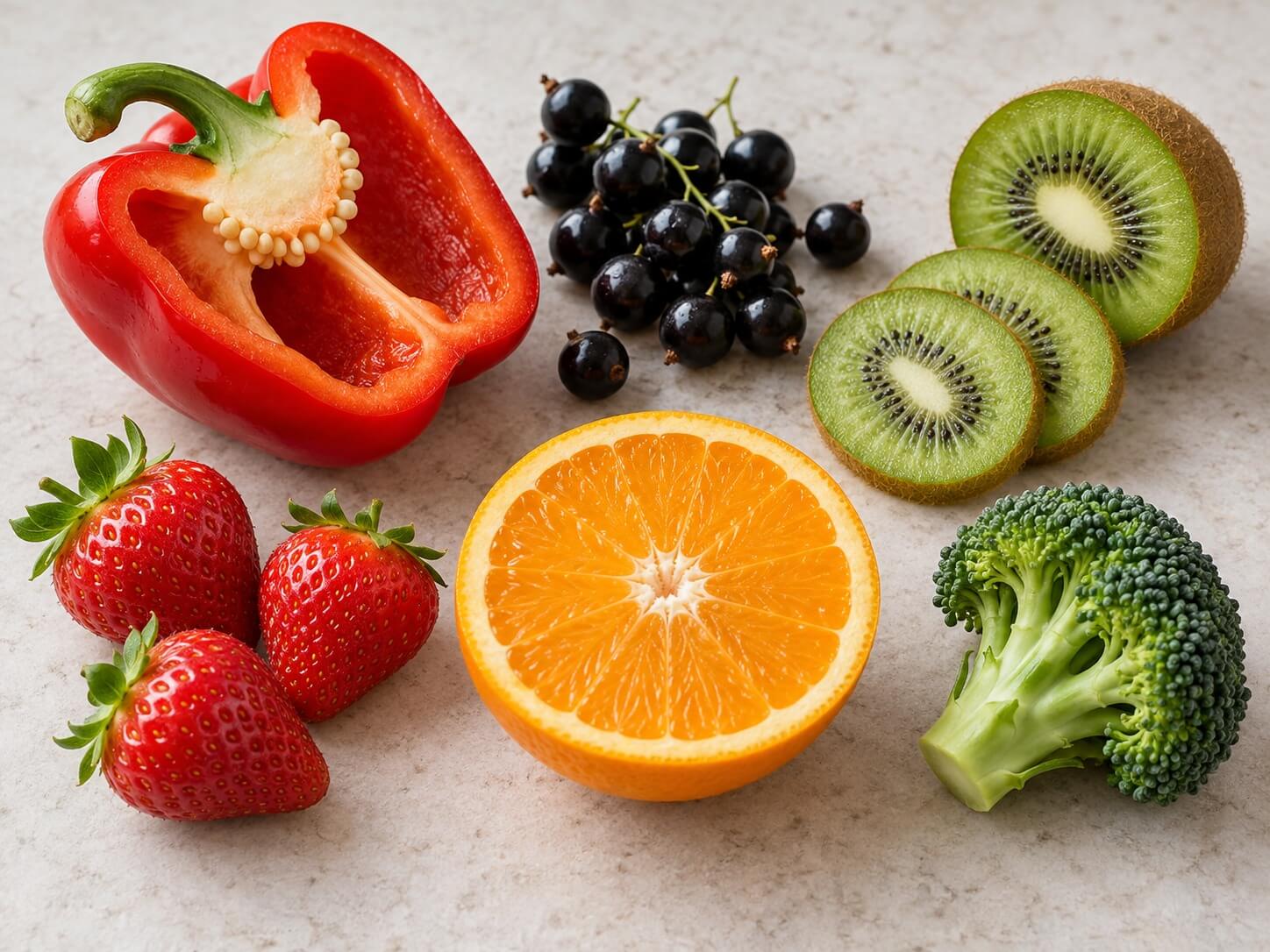
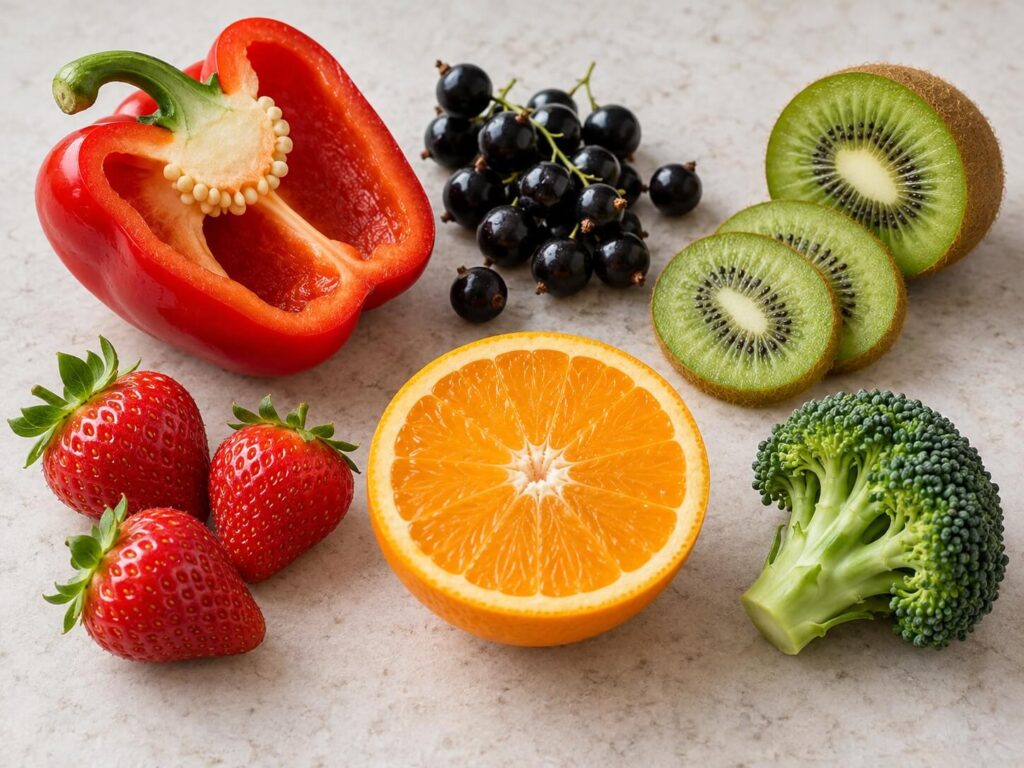
Peppers, blackcurrants, strawberries, citrus fruit, broccoli, Brussels sprouts and potatoes are among the sources listed by the NHS. Kiwi fruit also belongs among foods high in vitamin C.
|
Food group |
Examples |
Reading the comparison |
|---|---|---|
|
Fruit |
Blackcurrants, kiwi, strawberries, oranges |
Variety and serving size matter. |
|
Vegetables |
Peppers, broccoli, Brussels sprouts |
Preparation affects the amount retained. |
|
Starchy foods |
Potatoes |
A frequently eaten portion can contribute despite a lower concentration. |
When comparing vitamin C sources, values per 100 g describe concentration, not the amount eaten at a meal. Cultivar, ripeness and storage also influence composition; this table deliberately avoids an unsupported numerical ranking.
Examples of food sources; composition varies
04 · ABSORPTION & METABOLISM
Vitamin C Absorption: How Is It Absorbed and Used?
Intestinal absorption of ascorbate relies mainly on sodium-dependent vitamin C transporter 1, SVCT1. Vitamin C circulates in blood; sodium-dependent transporter 2 (SVCT2) supports tissue uptake. DHA can use some GLUT transporters before being reduced back to ascorbate.
Renal reabsorption conserves filtered vitamin C; urinary excretion increases as plasma concentration rises. Pharmacokinetic research therefore describes absorption, tissue uptake and renal handling together.
Vitamin C absorption is saturable. Tissue saturation describes a plateau in tissue concentrations, not unlimited storage. In a controlled depletion–repletion study of seven healthy volunteers, increasing oral intake produced a non-linear response. Larger amounts did not translate into proportionally larger retained supplies.
05 · FORMS & TERMINOLOGY
Ascorbic Acid and Other Vitamin C Supplement Forms
L-ascorbic acid is vitamin C. Sodium ascorbate and calcium ascorbate are mineral salts. “Buffered” generally refers to a less acidic preparation, often using these salts; it is not proof of greater clinical effectiveness. Their sodium or calcium contribution may also matter.
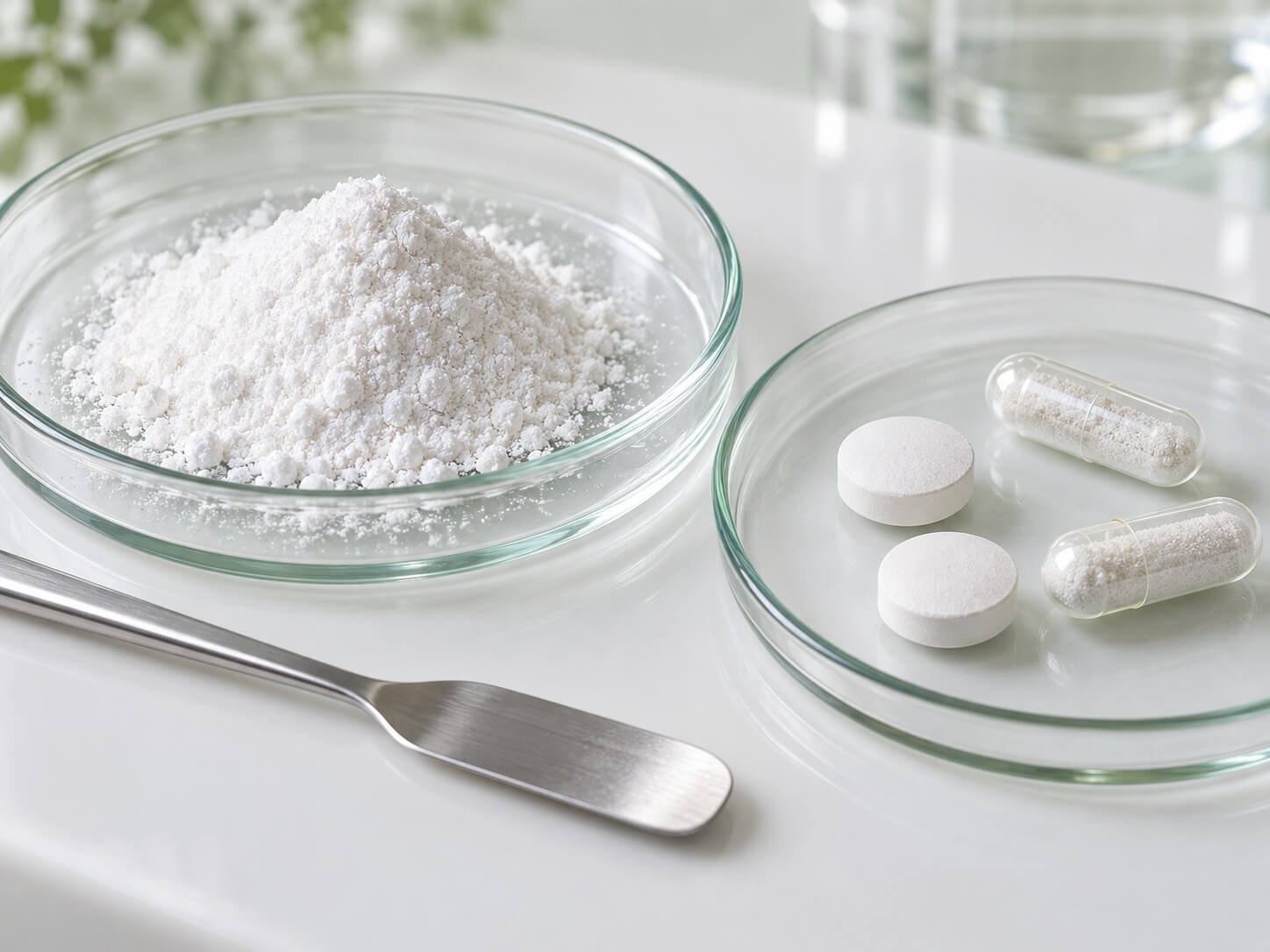
Vitamin C powder, tablets, capsules, effervescent products and liquids are delivery formats for a vitamin C supplement.
Liposomal vitamin C uses a lipid-based formulation. A 2024 crossover trial in 27 adults found higher plasma and white-cell exposure after a single 500 mg dose of one liposomal preparation than standard vitamin C. This bioavailability study measured exposure over 24 hours, not fewer infections or better long-term health. Results for one formulation cannot establish superiority of every liposomal product.
Illustrative formats; appearance cannot establish composition.
06 · PRODUCTION
How Is Vitamin C Produced?
Plants make vitamin C through their own metabolic pathways. Industrial L-ascorbic acid is generally produced through glucose-derived intermediates rather than extracted from mountains of citrus fruit.
The historical Reichstein process combined chemical and microbial steps. Industrial production literature describes how additional biological oxidation steps changed manufacturing.
Manufacturing origin does not make the resulting L-ascorbic acid a different vitamin.
07 · STABILITY
What Affects Vitamin C Stability?
Vitamin C can deteriorate during preparation and storage. Oxygen exposure, temperature, time, light, pH and certain metal ions influence oxidation and subsequent breakdown. Cutting increases exposed surface area and can bring enzymes and substrates together.
Losses during cooking can involve both chemical degradation and movement into cooking water. Their size depends on the food, treatment time, temperature and water contact. Drying is likewise a process whose conditions matter, rather than a guarantee of preservation or destruction.
Experiments with crushed broccoli show that heat also affects vitamin-degrading enzymes, making the relationship more complex than “hotter always means less”.
Follow food-storage guidance and supplement storage instructions. Protecting vitamin C powder from moisture and keeping prepared food appropriately stored are practical concerns; “cooking destroys all vitamin C” is an inaccurate generalisation.
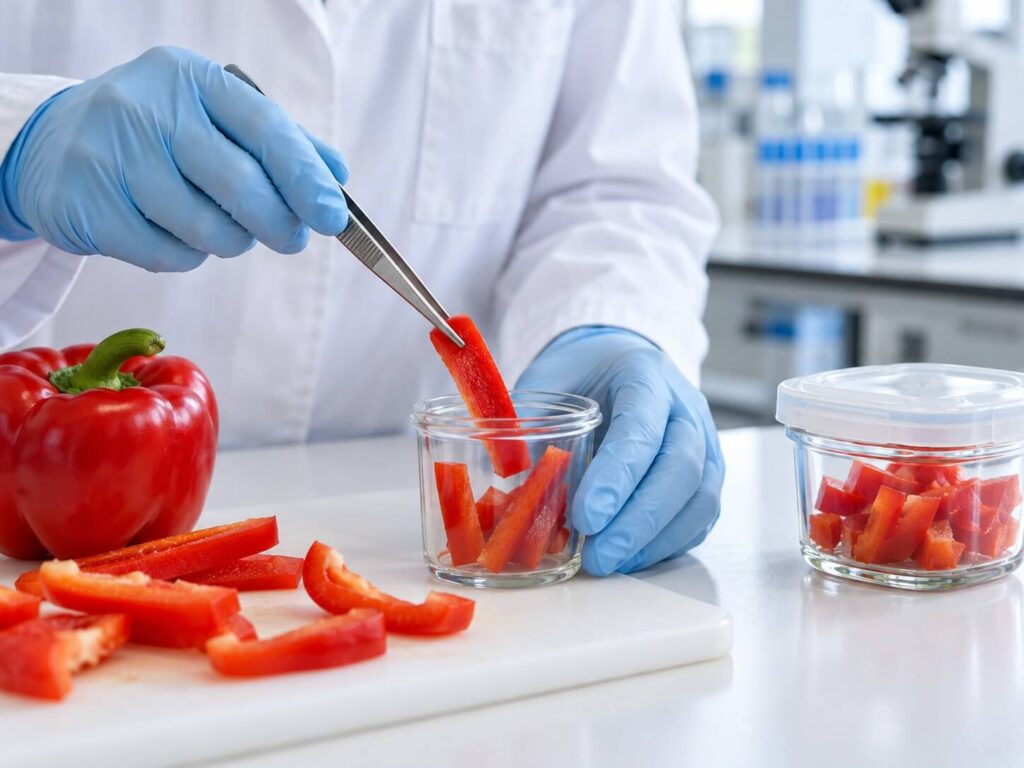
Illustrative food-science sample preparation.
08 · FOOD & SUPPLEMENTS
Vitamin C from Food and Supplements
Vitamin C food sources and a standard ascorbic acid supplement provide the same essential vitamin. Whole foods additionally supply fibre, other nutrients and a wider food matrix.
In a randomised human study comparing synthetic and kiwifruit-derived vitamin C, steady-state bioavailability was comparable across the measured compartments. This finding challenges a blanket claim that manufactured vitamin C is inherently inferior, while not proving that every food and formulation behaves identically.
Supplement doses may greatly exceed amounts in an ordinary food portion. Correcting inadequate intake and adding more to an already adequate diet are different situations.
|
Compare separately |
Useful distinction |
|---|---|
|
Food |
Vitamin C within a broader nutritional package. |
|
Supplement |
A declared amount in a particular formulation. |
|
Research |
Exposure and clinical outcomes are different endpoints. |
09 · SCIENTIFIC EVIDENCE
What Has Human Research Investigated?
Common colds and physical stress
The 2013 Cochrane review found no meaningful reduction in cold incidence in the ordinary population taking vitamin C regularly. Average duration was modestly shorter: about 8% in adults and 14% in children. Trials starting treatment after symptoms appeared did not show a consistent effect. Small groups exposed to brief, severe physical stress had different incidence findings; these should not be generalised to everyday activity.
Cardiovascular outcomes
The Physicians’ Health Study II randomised 14,641 male physicians aged 50 or older. Vitamin C at 500 mg daily did not significantly reduce major cardiovascular events over approximately eight years.
Skin and metabolic questions
Collagen physiology does not by itself prove cosmetic improvement from extra oral vitamin C. Nor does an association between higher vitamin status and healthier metabolic markers establish a supplement effect. Baseline status, combined ingredients, study duration and the measured outcome all influence what can reasonably be concluded.
10 · UNDERSTANDING BENEFITS
What Do “Vitamin C Benefits” Searches Mean?
11 · HEALTH CLAIMS
Scientific Evidence Is Not the Same as an Authorised Health Claim
A study does not automatically permit its findings to be repeated as a commercial claim. The EU authorised list and Great Britain register specify wording and conditions. EU rules remain relevant in Northern Ireland.
For example: Vitamin C contributes to the normal function of the immune system.
Most standard vitamin C function claims require the food to meet the conditions for being a source of vitamin C. That is not permission for a general “immune booster” promise.
Other authorised areas include collagen formation for specified tissues, oxidative-stress protection, energy metabolism, nervous and psychological function, fatigue reduction, vitamin E regeneration and iron absorption.
The separate immune-function claim concerning intense physical exercise requires 200 mg daily in addition to the recommended daily intake, with the specified consumer information. It must not be reduced to an unrestricted sports-performance claim.
12 · WHAT TO COMPARE
What to Look for on a Vitamin C Supplement Label
For a vitamin C supplement, check the amount per serving and recommended intake. Vitamin C powder also needs a clear scoop or weight measure. Compare the chemical form, other nutrients, sweeteners, mineral contributions, storage advice and manufacturer traceability.
|
Reference |
Amount |
Purpose |
|---|---|---|
|
UK adult reference nutrient intake (RNI), ages 19–64 |
40 mg/day |
NHS dietary guidance |
|
EU/GB nutrient reference value (NRV) |
80 mg |
Reference for percentage labelling |
The labelling reference is not a personalised requirement. A serving containing 80 mg provides 100% NRV; it does not follow that every UK adult needs precisely that amount.
European dietary recommendations also vary by authority. EFSA’s adult population reference intakes are 110 mg for men and 95 mg for women. These use a different framework and should not be silently substituted for UK guidance.
13 · DEFICIENCY
Vitamin C Deficiency and Scurvy
Persistently inadequate intake can cause vitamin C deficiency; its severe form is scurvy.
The NHS describes fatigue, weakness, gum changes, easy bruising and poor wound healing among relevant signs. Dietary history, symptoms and clinical assessment need to be considered together.
Risk can rise with very restricted eating, difficulty obtaining or tolerating food, and circumstances that compromise a balanced diet. Smoking is another recognised risk factor.
Seek professional assessment if vitamin C deficiency is suspected, particularly when bleeding, bruising or healing problems accompany restricted intake.
14 · SAFETY & LIMITATIONS
Can You Take Too Much Vitamin C?
Yes. The NHS warns that amounts above 1,000 mg daily can cause stomach pain, diarrhoea and flatulence.
Vitamin C metabolism can contribute to urinary oxalate. The NIH safety review discusses uncertainty around stone risk and particular concerns in people with renal disorders or pre-existing hyperoxaluria. Iron-overload conditions also need attention because it increases non-haem iron absorption.
People with kidney disease, recurrent stones, haemochromatosis or ongoing cancer treatment should discuss supplementation with their treating professional. Relevant medicine interactions and treatment contexts should be assessed individually.
Do not adopt an overseas upper intake limit as though it were a UK recommendation. Food intake, supplemental intake, individual health and the reason for use all matter; this guide does not prescribe a personal dose.
15 · COMMON MISUNDERSTANDINGS
Common Vitamin C Misunderstandings
“Oranges are always the richest source.”
Several foods high in vitamin contribute substantially. Concentration, portion size and preparation must be compared consistently.
“More swallowed means proportionally more absorbed.”
Vitamin C absorption and renal handling limit the relationship. A larger label number does not establish a larger useful effect.
“Synthetic ascorbic acid is a different vitamin.”
Manufactured L-ascorbic acid has the same chemical identity. Differences between finished formulations need their own evidence.
“Every advanced formulation is clinically superior.”
Better exposure in a particular study is not proof of better outcomes for all users. Look for direct comparisons and the endpoint measured.
“It prevents everyone from catching a cold.”
Regular use, treatment after symptoms and unusually stressed populations are different research questions.
16 / FAQ & key takeaways
Vitamin C FAQ
THE ESSENTIAL POINT
Key takeaweys
Vitamin C benefits should be judged by the function or outcome being discussed. Supporting normal collagen formation is different from demonstrating visible skin improvement; contributing to immune function is different from preventing infection.
Vitamin C sources in food and standard supplements supply the same essential vitamin. Formulation, dose and processing can affect exposure and stability, while foods also provide a wider range of nutrients. Neither a higher dose nor an unfamiliar delivery format automatically establishes a better outcome.
For a vitamin C supplement, read the amount per serving, chemical form, percentage NRV and storage instructions. Keep the UK adult dietary recommendation separate from the labelling reference. Finally, judge research by its participants, baseline status, preparation and actual endpoint.
Vitamin C in the LR Product Range
For any LR nutrition product, check the current country-specific label for vitamin C content, serving size and percentage NRV. Formulations can differ by market and change over time.
Research on isolated vitamin C does not establish the effects of a finished multi-ingredient product. Any vitamin C health claim must meet the applicable wording and amount conditions. This guide therefore makes no claim about an unverified current LR formulation.
Health information: This article is provided for general informational purposes and does not replace professional medical advice.