INGREDIENT GUIDE
Collagen
Types, processing & product forms
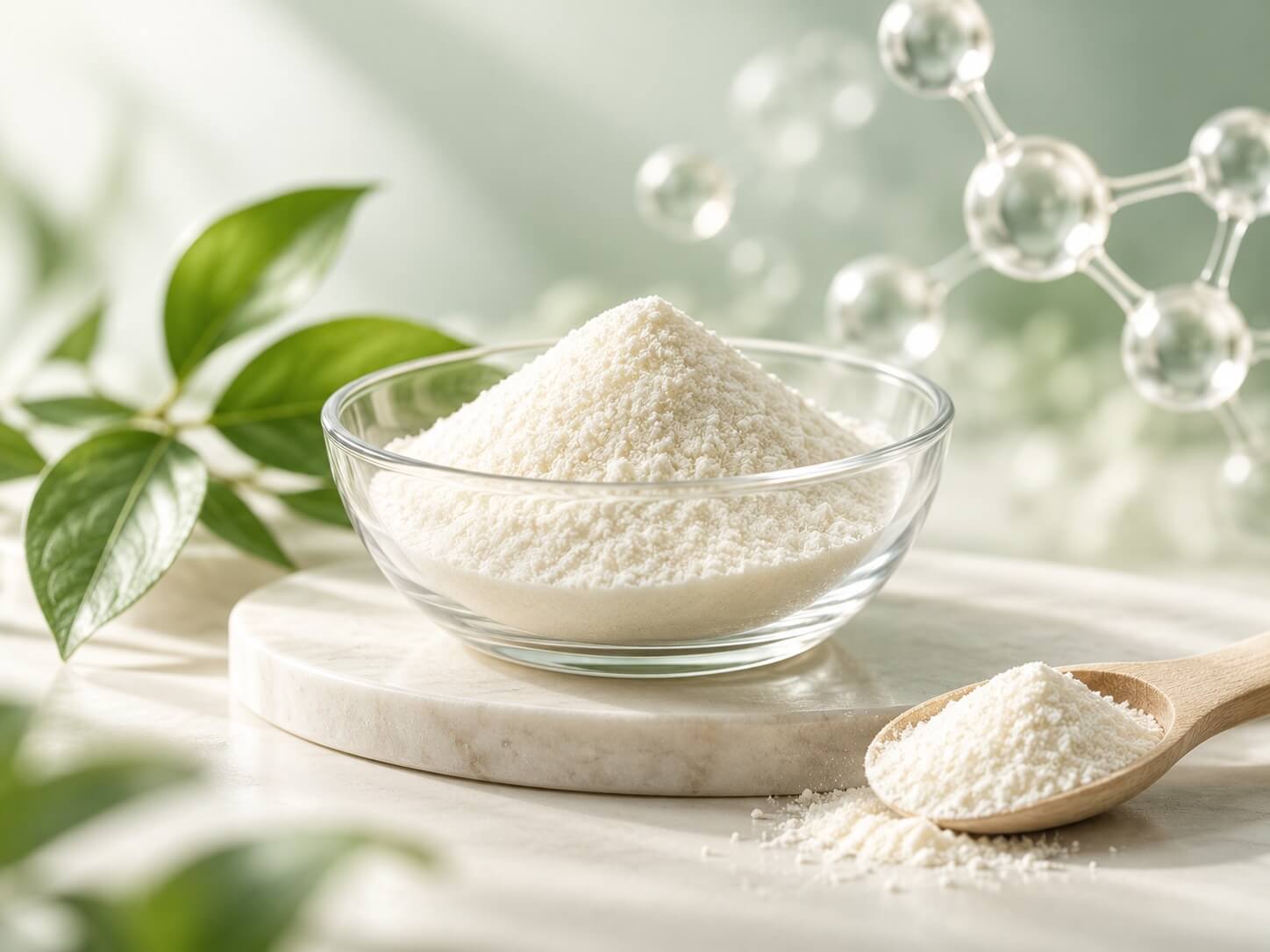
Collagen is a family of structural proteins that helps give skin, bones, cartilage and other connective tissues their organisation and strength. The body produces these proteins naturally, while commercial ingredients usually come from animal tissues and are processed into preparations such as gelatin or collagen peptides. These ingredients appear in foods, supplements and cosmetics, but their names describe different things: biological type, source, processing or product format. This guide explains those distinctions, how these proteins form in the body and are processed commercially, what human studies have investigated, and which quality details are useful when interpreting an ingredient label. It also separates research findings from authorised health claims.
Source referenced
Forms explained
Educational content
Collagen at a glance
01 / THE PLANT & ITS COMPOSITION
What is Collagen
Collagen is the most abundant protein in the human body. Much of it sits outside cells in the extracellular matrix (ECM): the supporting material that surrounds cells and helps organise tissues. Its role depends on its type and location, from resisting pulling forces in tendons to supporting the specialised structure of cartilage and basement membranes.
It is therefore a family of related proteins, rather than a single substance with one function. Its normal biological importance does not, by itself, demonstrate that taking extra collagen improves a particular health outcome.
02 / SCIENTIFIC BACKGROUND
From amino acids to fibres
Collagen molecules contain three protein strands called alpha (α) chains. Their characteristic triple-helical regions have a repeating Gly-X-Y sequence: glycine occupies every third position, while X and Y are often proline and hydroxyproline. Glycine is small enough to fit within the tightly packed centre; proline and hydroxyproline help shape and stabilise the structure.
In fibrillar collagens, molecules assemble into larger fibrils. Chemical links between molecules, called cross-links, help stabilise these assemblies. Not all collagens form fibrils: some build networks.
How the body makes collagen
Cells including fibroblasts make precursor chains, modify them and assemble procollagen. For fibrillar collagen, terminal portions are removed after secretion, allowing further assembly outside the cell. Vitamin C supports enzymes involved in hydroxylation, a chemical modification needed for normal collagen formation. This is a controlled biological process, distinct from manufacturing a commercial powder.
03 / BIOLOGICAL TYPES
Types I, II, III, IV & V
Roman numerals identify members of this protein family with different structures and tissue distributions. They are not quality grades.
|
Type |
Examples of location and role |
|---|---|
|
I |
Skin, tendon and bone; a major fibril-forming collagen. |
|
II |
Cartilage; an important part of its fibrillar framework. |
|
III |
Skin, blood vessels and other soft tissues, often alongside Type I. |
|
IV |
Basement membranes; forms supporting networks rather than typical fibrils. |
|
V |
Found with Type I in several tissues, including the cornea; helps regulate fibril assembly. |
Found with Type I in several tissues, including the cornea, helps regulate fibril assembly.
04 / ORIGIN
Where does collagen come from?

Bovine – cattle tissues such as hides and bones.
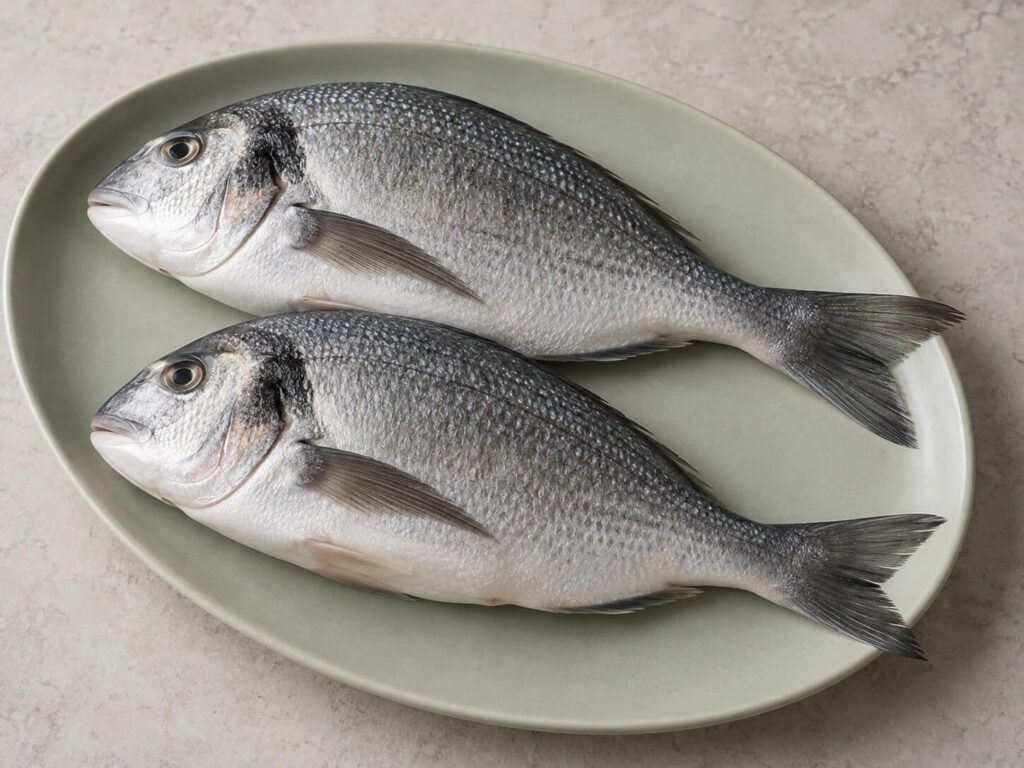
Fish – skin, scales and bones are potential raw materials.
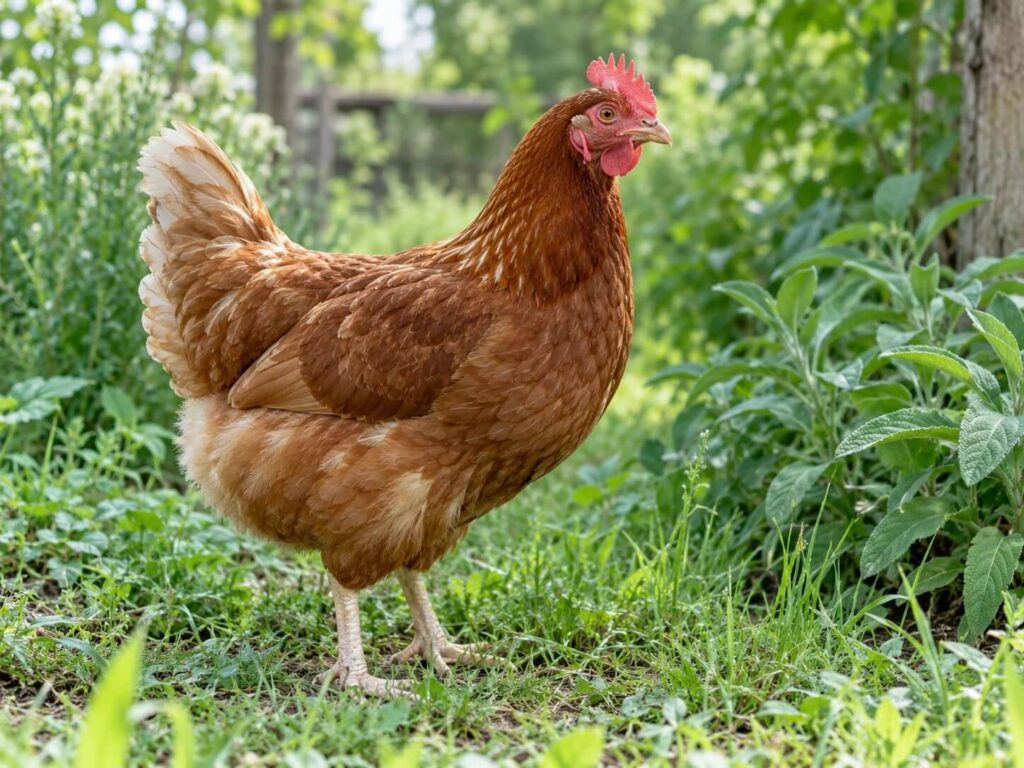
Poultry – tissues including skin and cartilage.
Porcine skin is another established source. The tissue matters as well as the animal: fish skin and chicken cartilage do not have identical collagen compositions. “Marine collagen” is a source description, often used for fish-derived ingredients; it does not establish species, peptide size or superiority over bovine alternatives.
Foods containing animal skin and connective tissue provide collagen. Heating these tissues can convert protein into gelatin; the amount in a broth depends on its ingredients and preparation. Ordinary plant foods do not contain animal collagen. Their proteins and micronutrients can nevertheless contribute to the diet from which the body makes its own proteins.
05 / PROCESSING
How collagen powder is made
Commercial processing depends on the raw material and intended ingredient. A native preparation must preserve structural features; a hydrolysate deliberately breaks protein chains down. The following is an illustrative route, not a universal recipe.
Not every process includes every step, and their order can differ. A published manufacturing method cannot be attributed to an LR ingredient without specific documentation.
06 / FORMS & VARIANTS
Collagen, gelatin & peptides
Native / undenatured collagen
Retains relevant native structural features, including the triple helix. “Undenatured Type II” describes a specific preparation category; it should not be treated as interchangeable with hydrolysed powder.
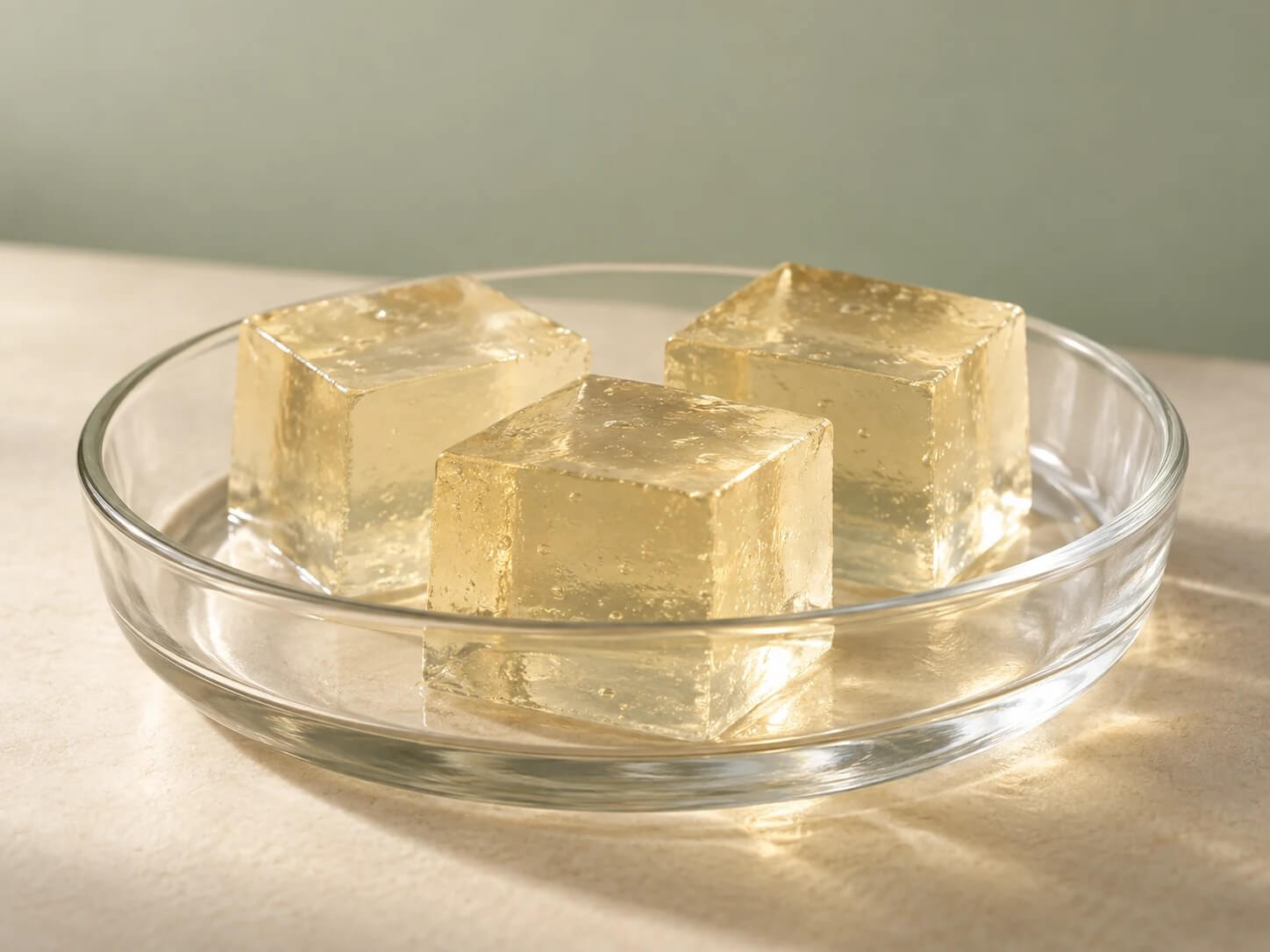
Gelatin
Produced by denaturing collagen and partially breaking down its chains. Denaturation unfolds the ordered structure. Gelatin can form gels under suitable conditions; source, concentration and processing affect its behaviour.
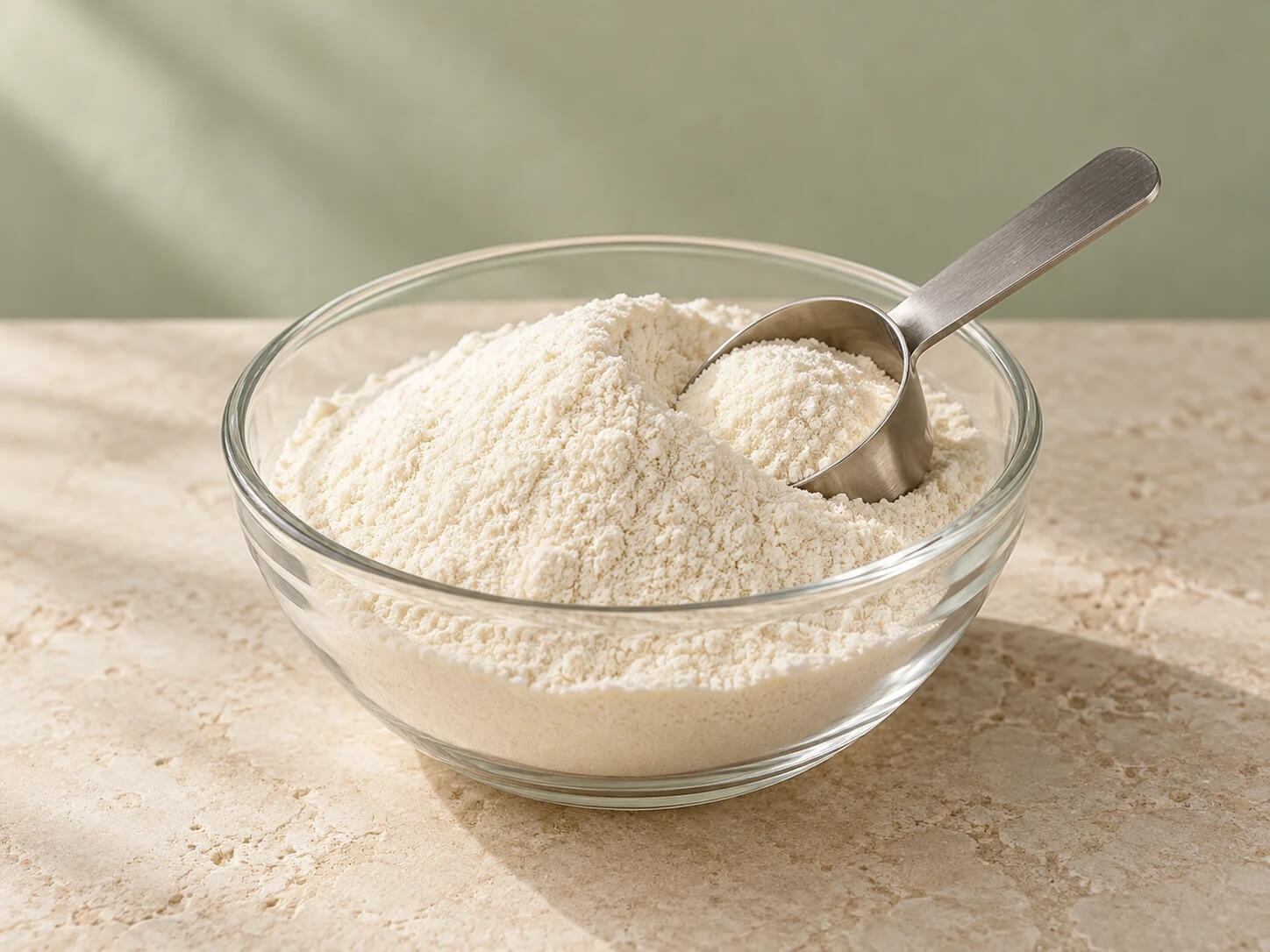
Hydrolysed collagen / collagen peptides
Further chain cleavage produces smaller peptides. “Collagen hydrolysate” and “collagen peptides” commonly describe this category, rather than two reliably separate grades. These mixtures generally dissolve more readily and do not form gelatin-like gels.
One label, four different questions
Topical aloe vera gel is generally tolerated, although burning, itching, rash and eczema have been reported. Stop using a product that causes a reaction. Evidence concerning treatment preparations should not be used to justify applying a cosmetic gel to a serious burn or open wound.

Three chains form a collagen triple helix. Simplified schematic; not an atomistic model or tissue micrograph.
07 / TYPICAL APPLICATIONS
Why it appears in different products
Food & beverages
Gelatin provides gelling and texture in foods. Hydrolysates can be incorporated into drinks and other foods where a soluble protein ingredient is useful. Processing changes these functional properties.
Food supplements
Peptides are supplied as powders, ready-to-drink liquids, capsules or tablets. Compare the actual ingredient amount per daily serving: the weight of a scoop or volume of a drink also includes other ingredients.
Cosmetics & biomaterials
Collagen derivatives are used in cosmetic formulations and specialised biomedical materials. These applications have different specifications and cannot be used as evidence that an oral supplement has the same effects.
Topical use is a separate question
The cosmetic ingredient name HYDROLYZED COLLAGEN has functions including film formation, moisture retention and skin conditioning in the cosmetics industry’s COSMILE database. These describe formulation roles, not proof that a cream rebuilds dermal collagen. Oral trial results cannot substantiate the performance of a topical finished product.
08 / HUMAN RESEARCH
What does scientific evidence show?
Digestion breaks collagen preparations into amino acids and smaller peptides. Human studies have detected hydroxyproline-containing peptides in blood after ingestion. Absorption is a mechanistic observation; it does not prove that a supplement reaches a chosen tissue in an effective form or produces a clinical benefit.
SKIN
Positive pooled findings, uncertain reliability
A 2023 meta-analysis of 26 trials reported improved hydration and elasticity. Preparations, study populations and durations varied. One illustrative trial tested 2.5 or 5 g daily for eight weeks in 69 women aged 35–55, reporting improvements in elasticity with a specific hydrolysate.
A 2025 meta-analysis of 23 trials found positive pooled results, but no significant benefit in the high-quality subgroup or in studies without pharmaceutical-company funding. This makes a general promise of wrinkle reduction or younger-looking skin unjustified.
JOINTS
Positive pooled findings, uncertain reliability
A review published in 2025 included 11 trials and 870 participants with knee osteoarthritis. Pooled pain and function scores favoured supplementation, but results varied substantially between studies.
Preparations differ: a six-month trial used 40 mg daily of a branded ingredient containing undenatured Type II collagen, whereas hydrolysate trials often use gram quantities. The 40 mg refers to the tested ingredient, not 40 mg of pure undenatured collagen. Findings on symptoms do not demonstrate rebuilt cartilage or establish preventive effects in healthy people.
BONE
A specific preparation and population
A 12-month trial in postmenopausal women with reduced bone mineral density studied 5 g of specific collagen peptides daily and reported improvements at the spine and femoral neck. It does not establish fracture prevention, an osteoporosis treatment or the same result with preparations from every source.
MUSCLE & EXERCISE
Positive pooled findings, uncertain reliability
A trial in older men combined 15 g of peptides daily with 12 weeks of resistance training and reported improvements in body composition and strength. It cannot show what supplementation alone would do.
A 2024 meta-analysis rated evidence for fat-free mass as moderate and for maximal strength as low. These peptides should not be presented as a proven superior replacement for other dietary proteins.
Digestion breaks collagen preparations into amino acids and smaller peptides. Human studies have detected hydroxyproline-containing peptides in blood after ingestion. Absorption is a mechanistic observation; it does not prove that a supplement reaches a chosen tissue in an effective form or produces a clinical benefit.
The quantities above describe research protocols, not personalised doses. Studies of isolated ingredients do not prove effects of an LR finished product.
09 / REGULATORY DISTINCTION
Research findings are not authorised health claims
EU decisions refused specific collagen-hydrolysate claims concerning joint health and a skin-function claim for VeriSol®P. New research does not itself authorise marketing wording. The Great Britain register also lists these claims as non-authorised.
Vitamin C is different. An authorised EU claim states: Vitamin C contributes to normal collagen formation for the normal function of skin
. Its use requires the food to qualify as at least a source of vitamin C. That claim belongs to vitamin C, not to collagen; adding vitamin C does not turn a trial of the protein alone into proof for the whole formulation.
10 / READING A SPECIFICATION
What is useful to compare?
Source & identity
Look for the animal, tissue where disclosed, and whether the ingredient is native, gelatin or hydrolysed. These details matter for dietary suitability and matching relevant research.
Peptide-size distribution
A hydrolysate contains a mixture. Molecular weight, often reported in daltons (Da) or kilodaltons (kDa), describes size—not a universal effectiveness score. An average does not describe every peptide.
Amount & formulation
Check the amount of the ingredient per serving separately from total product weight. Added nutrients, sweeteners and other active ingredients change what is being compared. A liquid is not automatically more effective than an equivalent powder.
Documented quality
Traceable sourcing, relevant contaminant and microbiological testing, and consistent specifications are more informative than “premium”. Solubility matters for mixing; it does not independently prove a health benefit.
For any claimed advantage, ask whether the supporting study used the same preparation and quantity. Marine origin, a shorter peptide or a more expensive format is not sufficient evidence of superiority.
11 / SUITABILITY
Safety & limitations
Source-related allergy is relevant. Fish-collagen reactions, including anaphylaxis, have been documented; hydrolysis should not be assumed to eliminate allergenicity. Someone with a relevant allergy needs clear source information and appropriate professional advice, rather than relying on a “marine” label.
Conventional animal-derived collagen is unsuitable for vegetarians and vegans. Supplement trials in selected adults cannot establish safety for every population or for indefinite use. Check the complete formulation and label: extra ingredients may have their own restrictions. If pregnant, breastfeeding or considering a supplement for a child, seek advice because evidence from trials in adults does not establish suitability in those circumstances.
12 / QUESTIONS
Collagen FAQ
THE KEY POINTS
Key takeaweys
Collagen is a structural protein family with different biological types and tissue roles. Commercial source, processing and presentation describe separate characteristics: bovine or fish origin is not the same question as native collagen, gelatin or hydrolysed peptides. Human studies report promising results for some preparations, but findings vary and important uncertainties remain, particularly around study quality and generalisation. Research does not automatically create an authorised health claim. The most useful comparison starts with a clearly identified ingredient, its amount and formulation, relevant source information, and evidence that actually matches the preparation being discussed.
FURTHER PRODUCT CONTEXT
Collagen in LR products
LR’s German Nutrition Product Manual lists collagen hydrolysate in Aloe Vera Drinking Gel Active Freedom, alongside other ingredients. This confirms ingredient presence in that documented formulation; it does not establish equivalence to the preparations or doses in the trials above.
For a finished product, check the current country-specific label, serving and complete formula. The article’s research summaries should not be read as claims for that product.
This article is provided for general informational purposes and does not replace professional medical Health information This guide provides general educational information and does not replace individual medical advice. Ingredient photographs are AI-generated illustrations; they are not batch samples or evidence of purity.advice.