LR ALOE VERA
Aloe Vera Repairing Lotion for stretch marks
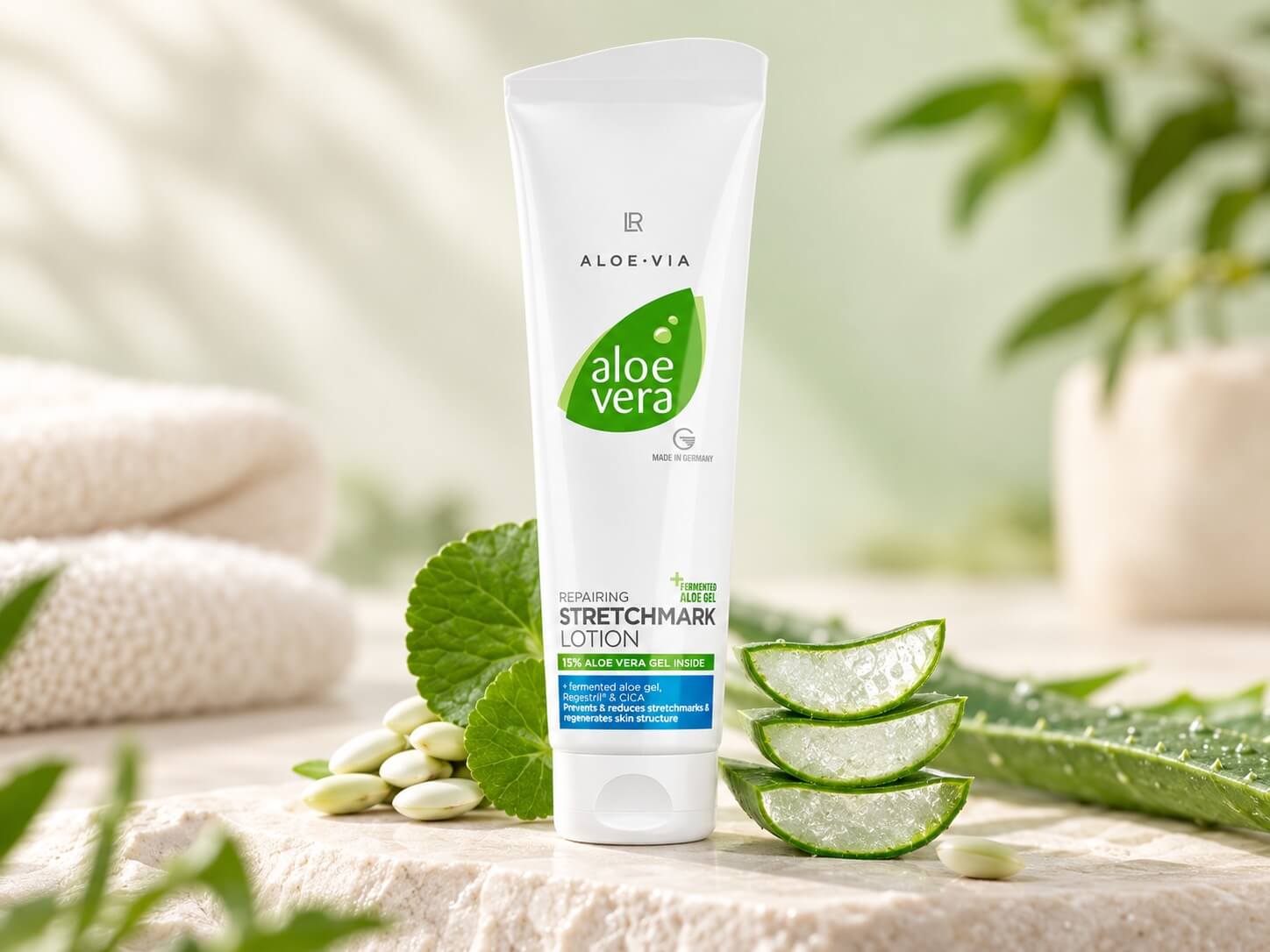
Lotion for Stretch Marks from LR Health & Beauty combines 15% aloe vera with fermented aloe vera gel, Regestril™ and CICA in a fragrance-free body lotion. Part of the LR ALOE VIA range, the 150 ml formula moisturises and leaves skin feeling soft and supple, while LR reports improvements in the appearance of red stretch marks after eight weeks.
This guide explains the ingredients, the difference between red and white marks, and what the reported results mean. You will also find the manufacturer’s application instructions and practical points for comparing a stretch mark lotion with other body-care options.
LR Aloe Vera Lotion for Stretch Marks at a glance
Body lotion · 150 ml
LR ALOE VIA body care for skin with stretch marks.
15% aloe vera
With fermented aloe vera gel, Regestril™ and CICA.
Fragrance-free formula
Described by LR as mild; moisturises and leaves skin soft.
Twice-daily application
Apply to affected areas and massage in gently.
In this article: Overview | Formula | Understanding stretch marks | 8-week results | How to use | your choice | FAQs | Where to buy
What is LR Aloe Vera Repairing Stretchmark Lotion?
It is a body lotion for stretch marks designed for skin with stretch marks. LR’s description covers marks associated with body changes such as puberty, pregnancy, weight changes and muscle growth. The product is supplied in a 150 ml tube under article number 20920-1.
Its identity is useful when comparing products: this is a massage lotion for stretch marks with a moisturising base and named skincare ingredients. “Repairing” forms part of the product name; the practical claims to examine are the reported appearance changes and the skin-softening care.
Key Ingredients & Formula
The Lr Aloe Vera Lotion for stretch marks brings together aloe, CICA-related compounds and a moisturising base. Here is how to read its main features.
Aloe vera: the 15% headline
LR states that the formula contains 15% aloe vera. Aloe Barbadensis Leaf Juice appears near the beginning of the ingredient list. In this aloe vera lotion for stretch marks, it sits within a complete moisturising formulation, alongside glycerin, emollients and shea butter.
Fermented aloe vera gel
Fermentation uses microorganisms to transform a starting material. LR highlights fermented aloe vera gel; the published information does not say which listed ingredient corresponds to it. The supplied information does not give a separate percentage for the ferment, so the 15% figure should not be assigned to it alone.
CICA and Centella asiatica
CICA skincare takes its name from Centella asiatica. The listed formula contains asiatic acid, madecassic acid and asiaticoside, compounds associated with this plant. This explains the CICA wording even though “Centella Asiatica Extract” does not appear as a separate name in the ingredient list.
Regestril™: a named ingredient complex
Regestril™ is the branded complex highlighted by LR in this lotion for stretch marks. The full formula also lists rutin, Phaseolus Lunatus (Green Bean) Seed Extract and two peptides: Palmitoyl Tetrapeptide-7 and Palmitoyl Tripeptide-1. The product information does not disclose the concentration of Regestril™.
Glycerin, shea butter and skin comfort
Glycerin is a humectant: it helps attract and retain water in the outer skin layer. Shea butter and emollients such as coco-caprylate contribute to a soft, smooth feel. These ingredients help explain the everyday skin hydration and comfort offered by the complete lotion.
Fragrance-free: reading the full formula
LR describes the lotion for stretch marks as fragrance-free and mild; the supplied ingredient list contains no Parfum. That is a useful choosing factor if you prefer a fragrance-free body lotion. Cetearyl Alcohol is a fatty alcohol used in cosmetic textures; the separately listed Alcohol is a different ingredient.
Full Ingredient list: Aqua (Water), Aloe Barbadensis Leaf Juice, Octyldodecyl Myristate, Polyglyceryl-6 Stearate, Glycerin, Glyceryl Stearate, Pentaerythrityl Distearate, Coco-Caprylate, Butylene Glycol, Butyrospermum Parkii (Shea) Butter, Cetearyl Alcohol, Octyldodecanol, Propylene Glycol Diheptanoate, Saccharomyces Ferment Lysate Filtrate, Asiatic Acid, Phaseolus Lunatus (Green Bean) Seed Extract, Madecassic Acid, Phenoxyethanol, Hydroxyacetophenone, Caesalpinia Spinosa Gum, Xanthan Gum, Ethylhexylglycerin, Polyglyceryl-6 Behenate, Asiaticoside, Citric Acid, Sodium Hydroxide, Lactic Acid, Sodium Benzoate, Cetyl Hydroxyethylcellulose, Potassium Sorbate, Rutin, Palmitoyl Tetrapeptide-7, Palmitoyl Tripeptide-1, Alcohol, Dipotassium Phosphate, Tocopherol
Understanding red and white stretch marks
Why their colour changes
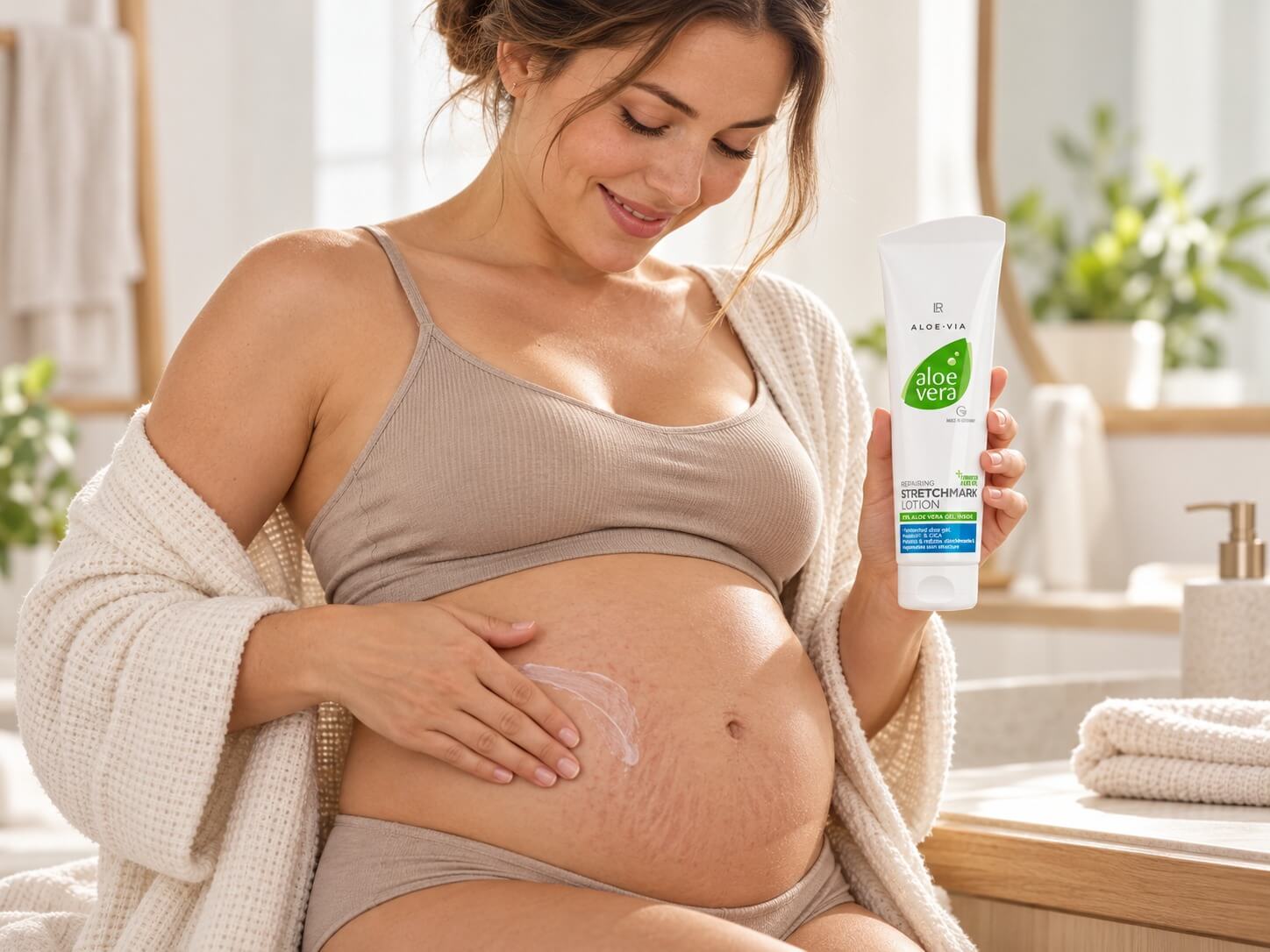
Stretch marks are common and often become less noticeable with time. The NHS overview of stretch marks notes that they can be pink, red, brown, black, silver or purple, and usually start off darker and fade over time. Newer marks may look red, pink, purple or brown; older ones can become pale or silvery.
What that means for your choice
LR’s description specifically associates its eight-week appearance results with red stretch marks. For white stretch marks, it emphasises moisturising care and soft, supple skin. This distinction helps you match the lotion’s stated benefits to the marks you have.
Skin hydration and skin elasticity are different
Hydration describes water content, particularly in the outer skin layer; elasticity describes how skin stretches and returns towards its original shape. A softer, moisturised feel is useful in everyday body care, but it is not by itself a measurement of changes to deeper stretch-mark structure.
What fermented aloe research can tell us
A 2025 study of kombucha-fermented aloe vera investigated how fermentation changed the material’s composition and skincare properties. The researchers reported differences in antioxidant activity and moisturising performance. This helps explain interest in fermentation, but the study used its own preparations, not LR’s lotion for stretch marks or its specific ferment.
Likewise, published research on Centella asiatica in cosmetics discusses different extracts and individual compounds. Ingredient research offers background; the most relevant evidence for this finished formula remains its own product testing.
What LR reported after eight weeks
LR reports the following reductions for its Aloe Vera Repairing Stretchmark Lotion:
Stretch-mark volume
Pigmentation
Overall appearance
Manufacturer’s test summary: eight weeks of application with 20 participants, followed by dermatological assessment, 3D skin analysis and corneometry, October 2024.
These measures describe different aspects of the result. Volume concerns the marks’ three-dimensional profile, pigmentation concerns colour, and overall appearance is a broader assessment. Corneometry assesses hydration of the outer skin layer; it does not directly measure removal of a stretch mark.
The public summary does not provide the full study protocol or comparison-group details. Read the figures as LR’s reported findings from this small product test, with individual results likely to vary, rather than as a promise that every mark will change by the same amount.
How to use LR Aloe Vera Lotion for Stretch Marks
LR’s application instructions are straightforward:
- Apply to the affected areas twice daily.
- Massage the lotion in gently.
LR also mentions using the LR ZEITGARD Pro with the Body Tool to work the lotion in. This is an optional addition to the hand-massage instructions; follow the device’s own guidance if you use it.
What to know before choosing
Match the format to your massage preferences
If you are comparing a stretch mark cream with a lotion for stretch marks, look beyond the name. Consider the complete ingredient list, pack size, fragrance preference and application frequency. Here, the defining features are a 150 ml tube, a fragrance-free formula and twice-daily massage.
Body changes and realistic expectations
You may be looking for aloe vera for stretch marks after weight changes, muscle growth or childbirth. The useful question is whether you want moisturising care, an improvement in the appearance of newer marks, or both. Complete removal is not an established result for this product.
For pregnancy stretch mark lotion searches, prevention and care of existing marks are separate questions. A Cochrane review of topical preparations during pregnancy found no high-quality evidence supporting prevention with the products studied. It did not test this LR formula.
Important information
Follow the current product label for application, storage and any precautions. The reviewed directions specify twice-daily application with gentle massage. For the optional ZEITGARD Pro Body Tool, refer to its separate instructions.
Lotion for Stretch Marks: frequently asked questions
KEY TAKEAWAYS
A closer look at aloe, CICA and moisturising care
LR Aloe Vera lotion for stretch marks combines 15% aloe vera, fermented aloe vera gel, Regestril™ and CICA in a fragrance-free, 150 ml body-care formula. Its daily use is simple: apply twice and massage gently.
The main distinction is between the manufacturer’s reported appearance improvements for red stretch marks and the moisturising, softening care described for skin with white marks. When comparing products, consider the full formula, application pattern and the type of marks you have. LR’s eight-week test provides product-specific context, while checking the current label helps you make an informed choice.
Where to buy Lotion for Stretch Marks
To explore this lotion for stretch marks for stretch marks further, visit the official LR shop and look for article number 20920-1. LR Select is an independent informational affiliate site and does not sell the product directly. The official shop handles orders, availability and checkout. Review the current 150 ml product listing, ingredient information and application guidance there before choosing. The link below leads to the German LR product page.
Affiliate disclosure: LR Select may earn a commission from qualifying purchases through affiliate links.