INGREDIENT GUIDE
Reishi Mushroom
Traditional Uses, Active Compounds & Modern Evidence
Reishi mushroom is a common name for several Ganoderma fungi associated with a long history of traditional East Asian use. These woody mushrooms are now sold as dried material, powders and extracts, but a familiar name does not guarantee an identical ingredient. Species, fungal material, cultivation and extraction can all influence what a preparation contains.
Much of the interest concerns beta glucans and triterpenoids, including ganoderic acids. Their chemistry helps explain why researchers investigate these fungi; it does not, by itself, demonstrate a health benefit in people. Traditional use, laboratory activity and clinical evidence answer different questions. This guide explains the terminology behind the label, how common forms are produced, what human research has investigated and which quality details are useful when comparing preparations.
Species explained
Contextual sources
Evidence in perspective
Reishi Mushroom at a glance
01 / THE INGREDIENT
What is Reishi mushroom?
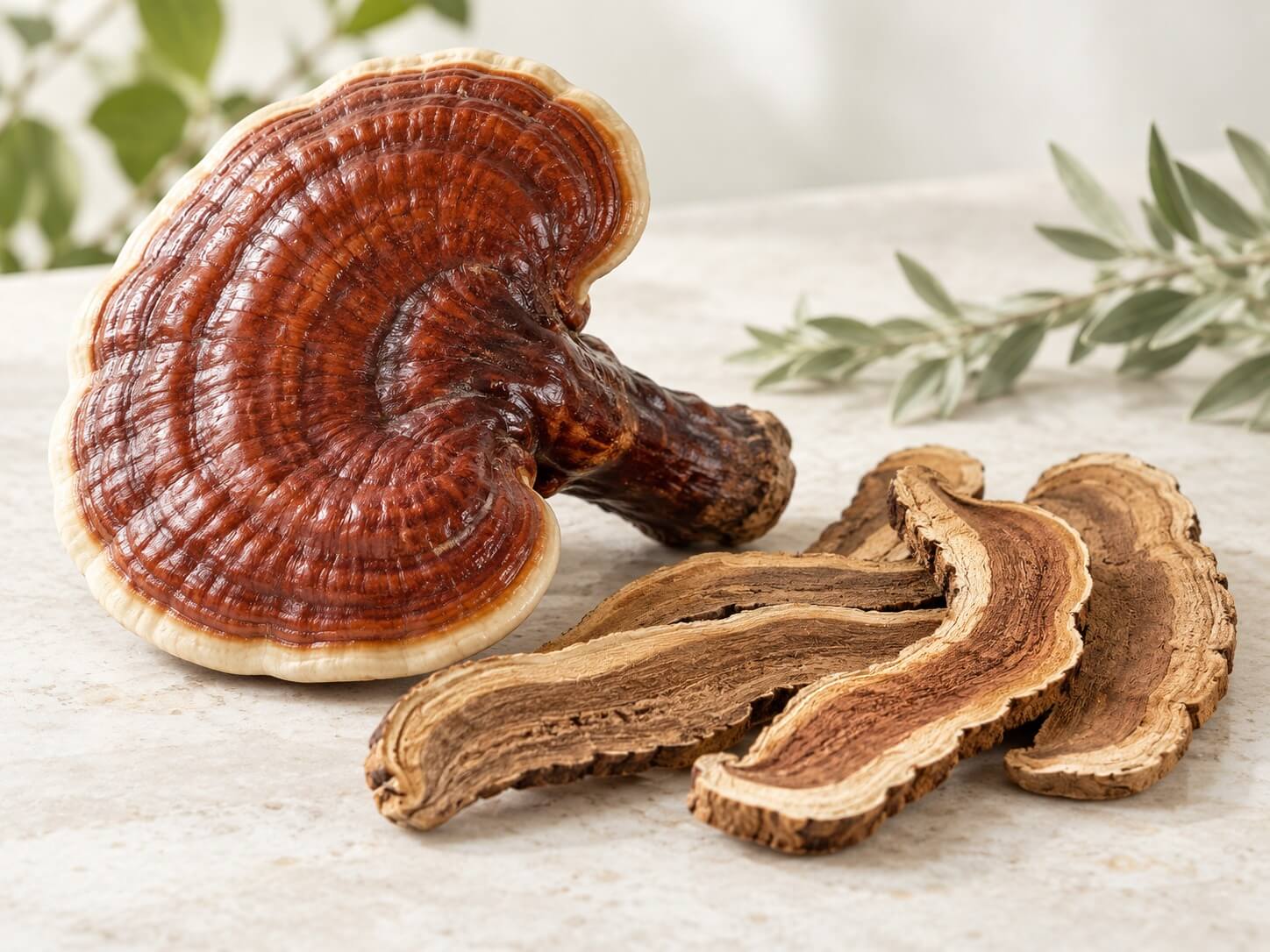
Red Reishi Mushroom is traditionally used as a medicinal mushroom and is now also sold in food supplements. “Medicinal” describes its history of use; it is not a guarantee of demonstrated efficacy or an authorised medicine status. Reishi Mushroom is a fungus, not a plant. The genus Ganoderma belongs to the family Ganodermataceae within Basidiomycota. Familiar red forms produce tough, often varnished-looking fruiting bodies, with pores beneath the cap rather than the gills of many culinary mushrooms.
These fungi grow in association with wood, including trunks, roots and stumps. Their firm texture and bitterness explain why dried slices, decoctions and powders are more familiar than a fresh mushroom meal. The scientific background to traditional use also describes modern cultivation and ingredient production. Historical reputation should not be read as clinical proof.
In this article
- What is Reishi?
- Species & terminology
- Fruiting body & mycelium
- Key compounds
- Origin & Cultivation
- Powder & Extract Forms
- Processing
- Quality
- Scientific Evidence
- Understanding benefit claims
- Research & Health Claims
- Safety & Limitations
- Common Misconception
- FAQ
Understand the Mushroom.
Understand the ingredient.
02 / SPECIES & TERMINOLOGY
Reishi, Lingzhi and Ganoderma species
“Reishi” and “Lingzhi” are common or traditional names, not precise laboratory identities. Ganoderma lucidum was originally described from Europe. The phrase sensu stricto means that species in its narrow taxonomic sense.
Much cultivated East Asian Lingzhi was historically labelled G. lucidum, although molecular work distinguishes it from the European species. Modern literature uses G. lingzhi and G. sichuanense. A 2023 re-examination of type material supported the latter name and treated G. lingzhi as a later synonym; a separate nomenclature discussion illustrates why naming remains contested.
This matters when comparing papers and labels. A historical species name may cover different material. Identification can combine morphology with DNA methods such as ITS sequencing, which examines a commonly used fungal barcode region. A photograph alone cannot authenticate a commercial batch.
03 / FUNGAL BIOLOGY
Fruiting body, mycelium and spores
Fruiting body
The visible reproductive structure, also called a basidiocarp. It produces microscopic basidiospores through structures in its pore-bearing surface.
Mycelium
A network of fine fungal threads called hyphae. Mycelium grows through its food source and can also be cultivated in liquid culture.
Spores
Reproductive cells collected as a separate material. Spore preparations are not interchangeable with ground fruiting bodies.
Comparative chemical research has examined all three materials. Different profiles do not establish a universal winner. “Myceliated substrate” can include both fungal biomass and remaining growth medium; it is not automatically the same as separated mycelium.
04 / KEY COMPOUNDS
What compounds are found in Reishi Mushroom?
Polysaccharides and beta glucans
Polysaccharides are long carbohydrate chains. Beta glucans are one group within that wider category. Fungal examples include glucose backbones joined through beta-(1→3) bonds with beta-(1→6) branches: the numbers describe molecular connections.
Analysis of cultured mycelium found differences in the quantity and molecular characteristics of these glucans. “Total polysaccharides” therefore does not mean “beta glucans”.
Triterpenoids and ganoderic acids
Reishi Mushroom contains lanostane-type triterpenoids, including families known as ganoderic and lucidenic acids. These are chemically different from carbohydrate polymers.
Chemical profiling across Ganoderma samples illustrates variation in triterpenoids and glucans. A declaration of total triterpenes is not a measurement of every individual ganoderic acid.
Other constituents
Proteins, sterols, phenolic compounds and lipids also occur. Their proportions depend on species, fungal material and preparation.
Finding a constituent, or observing antioxidant activity in a test tube, does not show what an oral product will do in a person. Composition is a starting point for research, not its clinical conclusion.
05 / ORIGIN & CULTIVATION
From wood-growing fungus to cultivated ingredient
Fruiting body and dried slices — an illustrative view of the source material.
Commercial fruiting bodies can be cultivated on hardwood logs or prepared sawdust-based substrates. Growing conditions and strain selection affect production, so “cultivated” is not a complete ingredient specification.
Substrate experiments have compared alternatives to conventional wood-based materials. A separate study of boreal strains and wood substrates measured fruiting-body yield and beta glucan content. These are cultivation findings, not demonstrations of a benefit from consuming the resulting mushrooms.
Traceability should connect the identified strain or species, growing material and harvested fungal part to the batch used in production.
06 / POWDER & EXTRACT FORMS
Reishi powder and extracts
The word “powder” describes physical form, not a single manufacturing method.
Whole-material powder
Dried mushroom material is milled into particles. This retains a broad mixture of constituents, including structural material; it is not an extraction step.
Extract powder
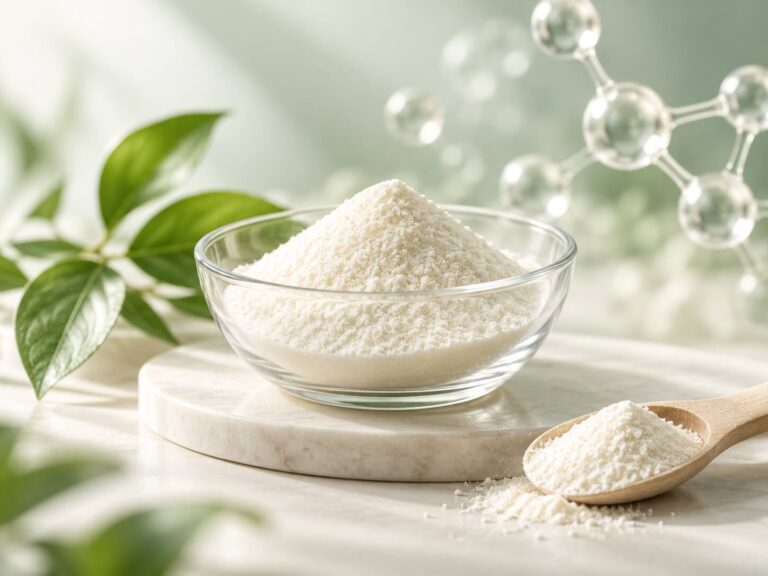
Selected constituents are transferred into a solvent, then the liquid is concentrated and dried. The resulting reishi powder may include a declared carrier. Its chemistry depends on the original material and process.
Capsules and liquid preparations
A capsule can contain whole powder, reishi extract or a mixture. A tincture describes a liquid preparation, commonly using alcohol and water. Neither format alone establishes composition or effectiveness.
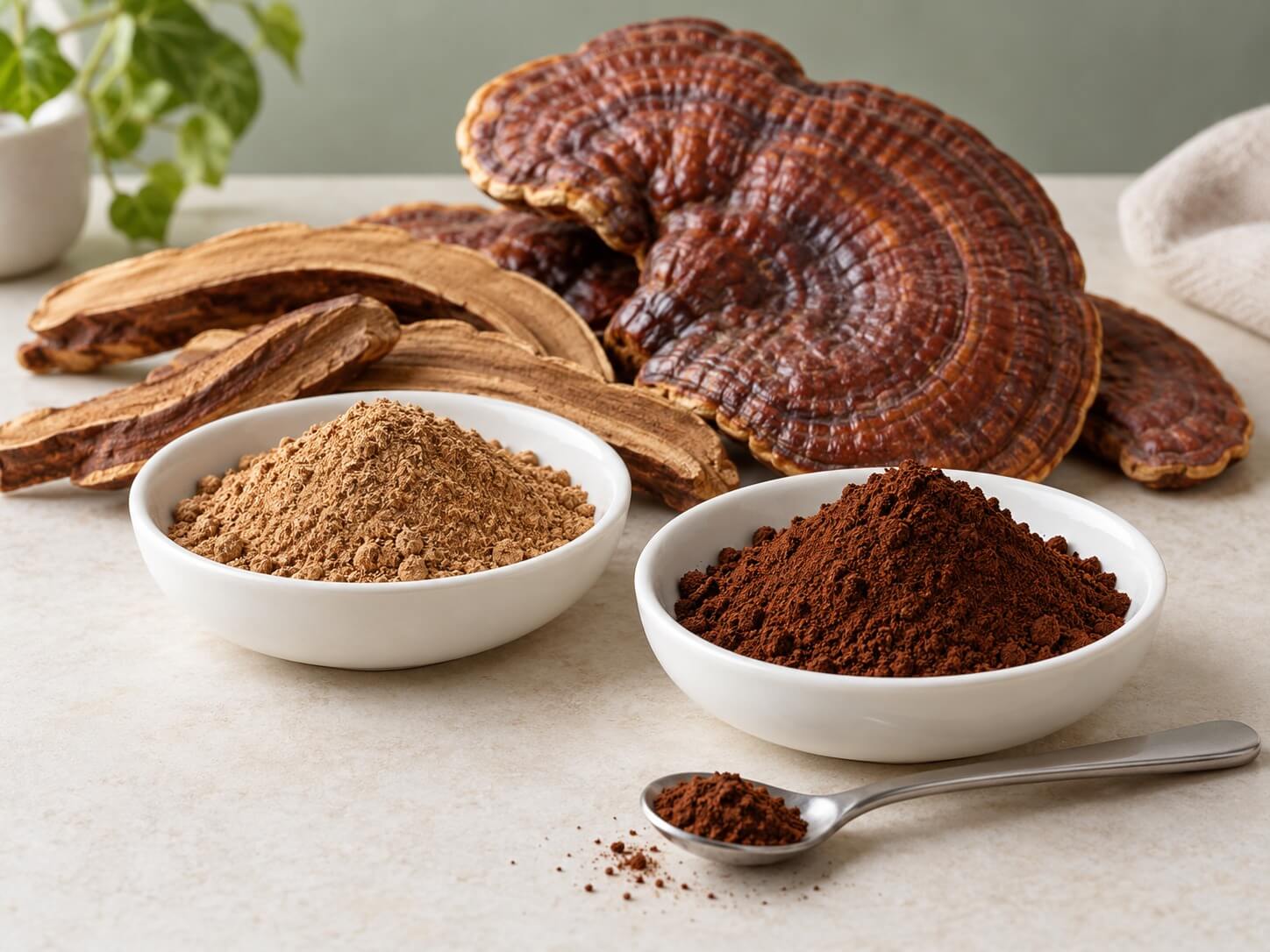
Illustrative forms; colour cannot verify concentration or composition.
07 / PROCESSING
How Reishi mushroom extracts are made
Manufacturers use different methods. These are common process principles, not a verified description of LR production.
“Dual extraction” generally describes using water and alcohol-based extraction to obtain a broader combination of fractions. It is not a standardised clinical performance rating. Triterpenoids have also been isolated from aqueous extracts, so simple water-versus-alcohol slogans can mislead.
08 / QUALITY
What defines Reishi mushroom quality?
A useful specification describes identity, composition and testing separately. None is a substitute for the others.
Identity and material
Look for the declared species, fungal part and origin. Ask whether mycelial material includes its growth substrate and how raw-material identity is checked.
Measured composition
A beta glucan declaration should identify the assay and reporting basis. Total polysaccharides may include other carbohydrates. Triterpenoid results also depend on what the method measures.
Reishi Extract information
A ratio such as 10:1 describes an input-to-extract relationship as defined by the supplier. It does not independently establish purity, marker content or clinical strength.
Batch documentation
Check traceability, microbiological quality and relevant contaminant testing, including heavy metals. A report should identify the batch, laboratory, methods and actual results.
A 2017 analysis of 19 US supplement batches found substantial differences using chemical fingerprints and carbohydrate analysis. It supports checking specifications, but cannot describe all current UK or European products.
Chromatography separates chemical constituents; DNA testing addresses identity. Neither test alone proves effectiveness.
For example, a measured concentration of 20% in 500 mg represents 100 mg of the measured fraction. That calculation clarifies a label; it does not establish an effective dose.
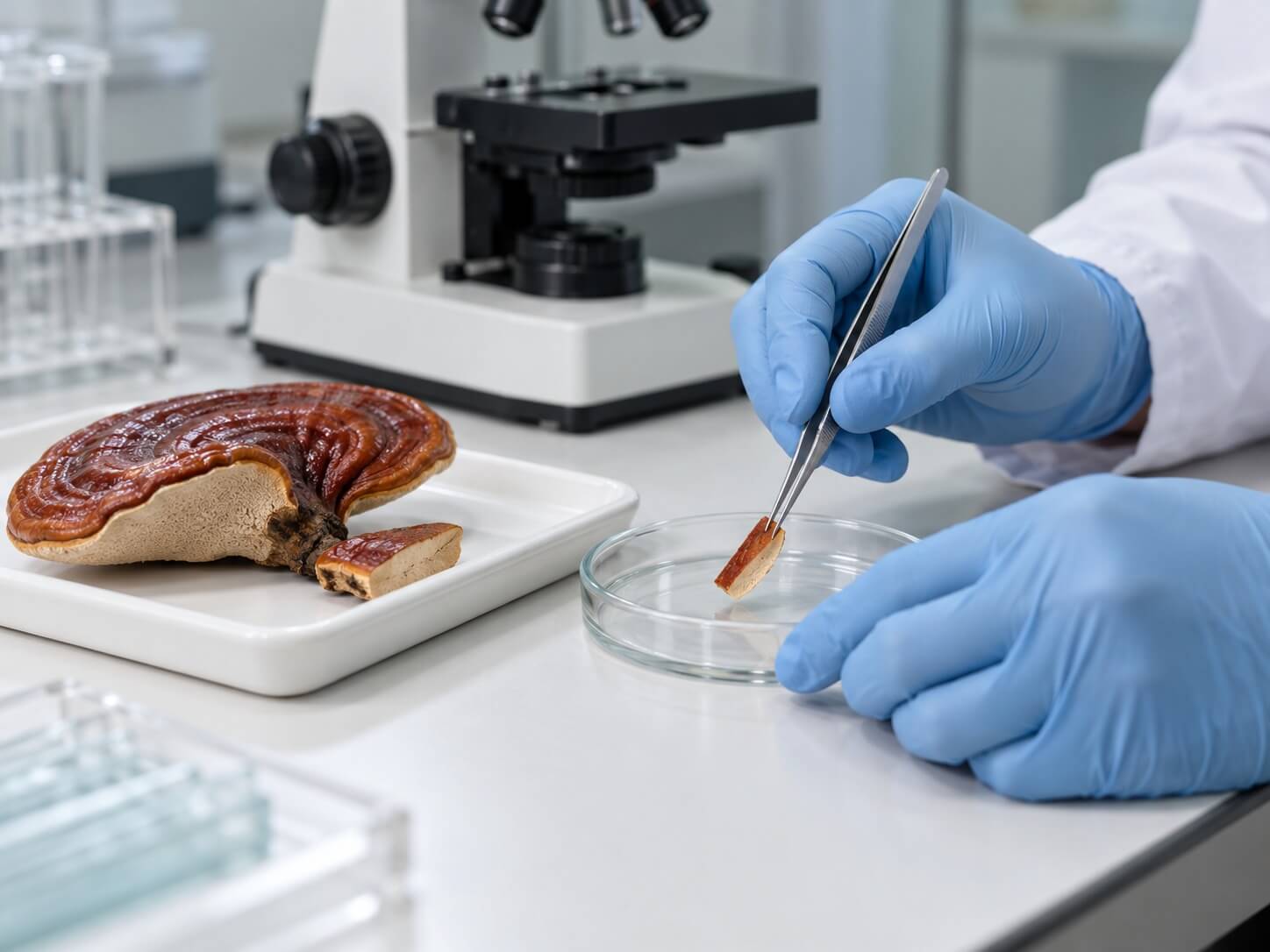
Laboratory activity generates hypotheses. Human trials test particular preparations in particular people. Neither establishes the effects of an unrelated finished product.
09 / SCIENTIFIC EVIDENCE
What has human research investigated?
A 2025 systematic review and meta-analysis combined 17 randomised trials involving 971 participants. Preparations, populations and treatment periods varied, and the authors rated certainty very low across outcomes. Some pooled measures changed, but broad, reliable benefits were not established.
METABOLIC MARKERS
Results do not support broad promises
In a 16-week trial involving 84 adults with type 2 diabetes and metabolic syndrome, participants received 3 g daily of a Ganoderma preparation, with or without Cordyceps, or placebo. The combined active groups did not improve the primary blood-glucose outcomes or secondary cardiovascular risk measures.
The 2025 review likewise found no significant overall effects on blood pressure, fasting glucose or lipid profile. A positive result for another marker cannot be extended to general cardiovascular protection.
IMMUNE-RELATED RESEARCH
Biomarkers are not everyday protection
Laboratory experiments investigate immune-cell signalling and responses to isolated fractions. Human adjunct studies have measured lymphocyte subsets and other immune indicators.
The Cochrane review reported changes in some measurements, but the studies concerned patients undergoing cancer care. Such findings do not demonstrate fewer infections or a generally “stronger immune system” in healthy consumers.
FATIGUE & WELLBEING
A specific preparation and population
A 2005 trial randomised 132 people diagnosed with neurasthenia to a polysaccharide extract or placebo. The reishi extract dose was 1,800 mg three times daily for eight weeks. The authors reported improvements in fatigue and wellbeing measures.
This older, preparation-specific study does not establish an effect on ordinary tiredness, insomnia or stress in the general population. Its dose is a study detail, not a recommendation.
CLINICAL ADJUNCT RESEARCH
Important limits remain
Cochrane evaluated five trials involving 373 people. Some adjunct outcomes appeared favourable, but studies were small and methodological quality was weak. None recorded long-term survival.
The review does not establish Reishi Mushroom as a first-line cancer treatment. Specialist adjunct research must not be presented as a reason to replace treatment or as proof that a retail supplement prevents disease.
10 / UNDERSTANING BENEFIT CLAIMS
What do “Reishi Mushroom benefits” searches actually mean?
Online discussions often group immunity, sleep, stress, fatigue and metabolic health into one list. The evidence is not equally developed for these topics. Immune mechanisms have substantial laboratory interest; fatigue has some preliminary human findings; metabolic results are inconsistent or negative in stronger trials.
The studies discussed here do not establish a dependable sleep or stress benefit for generally healthy adults. “Reishi benefits” is therefore best approached as a set of separate research questions: which material, which participants, which outcome and compared with what? Terms such as “adaptogen” do not answer those questions.
11 / RESEARCH & HEALTH CLAIMS
Research is not an authorised health claim
Scientific publication does not automatically permit the same wording in food advertising. The EU register and Great Britain register distinguish authorised claims and their conditions from non-authorised claims.
Some botanical claims remain under consideration. GB guidance on “on hold” claims makes their use conditional; “on hold” is not approval. This guide does not present a Reishi Mushroom-specific benefit as an authorised claim. Equally, authorised claims for oat or barley beta glucans cannot simply be transferred to mushroom beta glucans.
12 / SAFETY & LIMITATIONS
Safety and important limitations
Reported adverse effects include digestive upset, nausea, rash and insomnia. Short trials cannot establish long-term safety for every preparation. Clinical safety guidance notes inadequate pregnancy and breastfeeding data and concerns around bleeding risk, particularly with relevant medicines or surgery.
Memorial Sloan Kettering advises discussing use with a clinician when taking anticoagulants or immunosuppressants. Interaction concerns are not equally well demonstrated for every product; a pharmacist or treating clinician can assess the actual preparation and medicines.
NIH LiverTox records rare reports of acute liver injury, while noting that alternative explanations were often not adequately excluded. These reports warrant caution without proving that every reishi powder is harmful. Product variability, incomplete identification and concurrent exposures complicate interpretation. “Natural” does not establish safety, and supplements should not replace prescribed care.
13 / COMMON MISCONCEPTIONS
Common Reishi mushroom misunderstandings
14 / QUESTIONS & ANSWERS
Reishi Mushroom FAQ
THE ESSENTIAL POINT
Key takeaweys
Reishi mushroom describes a group of ingredients whose identity and composition deserve careful attention. Species names, fungal material and extraction methods explain different aspects of a preparation; none alone establishes its effects.
Beta glucans and triterpenoids are useful chemical categories, but total polysaccharides, extract ratios and laboratory activity should not be mistaken for clinical proof. Human research has investigated several outcomes, with important uncertainty remaining.
A meaningful comparison starts with traceable material, transparent processing and appropriate batch analysis. It then asks whether relevant human evidence actually matches the preparation. Traditional use and promising mechanisms provide context, while clear specifications and realistic expectations help readers interpret the label.
Reishi in the LR supplement range
LR’s official German product manual describes Reishi Plus as combining extract, reishi powder and vitamin C. The manual lists 240 mg extract, 100 mg powder and 60 mg vitamin C per capsule. Check the current country-specific label before relying on these amounts.
This formulation illustrates why the full ingredient list matters. Independent mushroom studies do not demonstrate the effects of the LR product, and any vitamin C claim must relate to that nutrient and meet the applicable conditions.
This article is provided for general informational purposes and does not replace professional medical advice.