INGREDIENT GUIDE
Aloe Vera Gel, Uses, Processing
& Scientific Research
Aloe Vera is a succulent plant whose fleshy leaves provide a water-rich inner gel used in skincare, drinks and supplements. However, the clear gel, yellow latex and material obtained from the whole leaf are different preparations, with different compositions and safety considerations. The name on a bottle does not always explain which preparation it contains or how it was processed. This guide explores the plant’s structure, what aloe vera gel contains, how commercial ingredients are produced, and what human research can—and cannot—tell us. It also explains useful quality questions and why findings about an ingredient cannot automatically be applied to a finished product.
PLANT-DERIVED
FORMS & PROCESSING
SCIENCE EXPLAINED
What is Aloe Vera
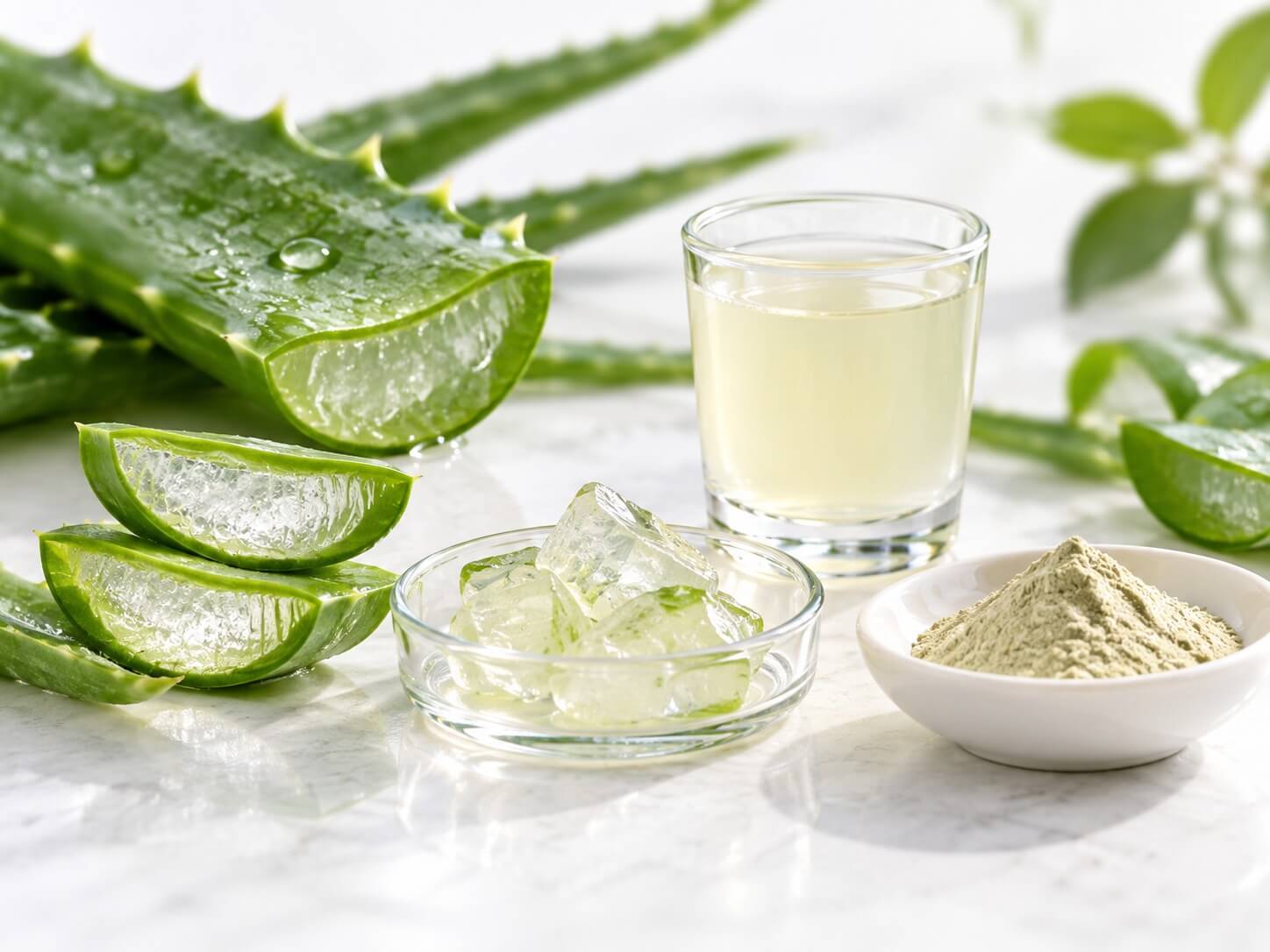
Aloe vera stores water in thick leaves arranged in a rosette. It resembles a cactus but belongs to a different botanical family. It is cultivated in warm regions for ingredients used in personal-care products and foods.
Aloe vera (L.) Burm.f. is the accepted species name in the GBIF botanical backbone. Aloe barbadensis Mill. is a synonym, rather than a separate “premium” variety. “Miller” refers to the botanist associated with that name; it is not a certification. Other species in the genus Aloe should not automatically be treated as equivalent ingredients
Inner gel, latex and whole-leaf material are different preparations.
In this article
- What is aloe vera?
- Leaf structure & composition
- Origin & sources
- Processing overview
- Forms & terminology
- Typical applications
- Scientific evidence
- Quality characteristics
- Safety & limitations
- Frequently asked questions
- Key takeaways
- Relevant LR content
Understand the plant.
Understand the ingredient.
01 / THE PLANT & ITS COMPOSITION
Scientific background: inside the aloe leaf
Inner gel, rind and latex
The green outer rind protects the leaf. Inside is water-storage tissue, called parenchyma, which forms the translucent, fleshy gel. Around the vascular tissues beneath the rind are cells associated with the bitter yellow exudate commonly called aloe latex. It is distinct from the clear inner gel.

Outer rind
Protective green layer
Latex-bearing tissues
Associated with yellow exudate
Inner gel
Water-storage tissue
Cutting or crushing a leaf can mix these materials. Consequently, “from the aloe leaf” tells us less than a description of the plant part, separation process and final analytical specification.
What is Aloin
Aloin is associated with the yellow latex. Aloin A and B are related hydroxyanthracene derivatives; this chemical group is central to concerns about certain aloe preparations taken orally. Aloin is not another name for aloe vera gel, and it should not be confused with acemannan.
What does aloe vera gel contain?
Fresh inner gel is predominantly water. Its smaller solid fraction includes polysaccharides, sugars, organic acids and other constituents. A polysaccharide is a long chain of sugar units. Acemannan is an acetylated, mannose-rich polysaccharide studied extensively in aloe research; “acetylated” describes chemical groups attached to its structure.
Composition varies with growing conditions, handling and processing. Detecting a vitamin, mineral or amino acid does not establish a nutritionally meaningful amount per serving. Likewise, acemannan content or a laboratory antioxidant result alone does not establish a benefit in people.
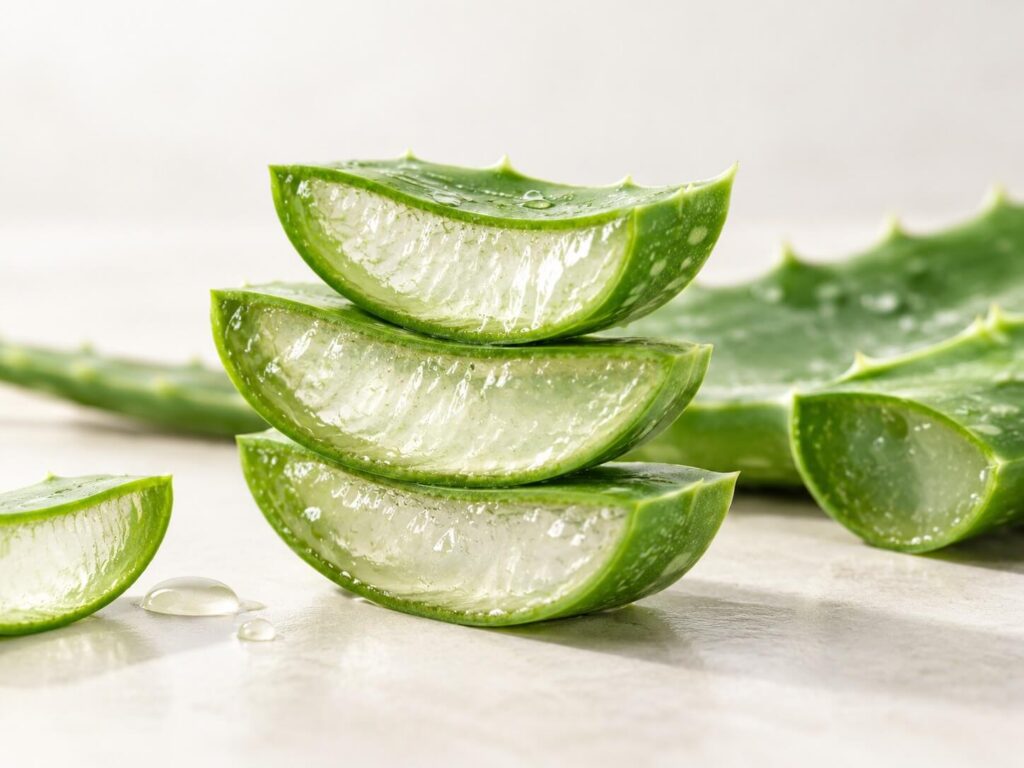
The clear inner tissue is distinct from the rind and latex-bearing tissues.
Where does the ingredient come from?
Commercial aloe vera ingredients begin with cultivated leaves. Species identification, growing conditions, harvest handling and traceability are relevant to consistency. A country of origin alone does not prove that an ingredient performs better.
Aloe-derived material is plant-based, but a finished product may contain animal-derived ingredients. Honey, collagen or capsule materials must be considered separately when assessing vegan suitability. The same principle applies to organic status: it requires appropriate documentation, not simply a photograph of a plant.
02 / FROM PLANT TO INGREDIENT
How is Aloe Vera gel obtained and processed?
Manufacturers use different routes according to the intended ingredient. The following describes general approaches, not a verified production method for LR. Processing reviews document filleting, filtration, stabilisation, concentration and drying, but individual processes vary.
Separating the starting material
In inner-leaf processing, the rind is removed to recover the gel-bearing tissue. Careful separation helps limit carry-over from latex-bearing areas. In whole-leaf processing, the starting material includes the outer parts as well as the gel, making subsequent purification particularly important.
Filtering and decolourising
Filtration can remove suspended fibres and particles. Decolourisation commonly involves activated carbon followed by filtration to reduce unwanted constituents, including hydroxyanthracene compounds. It is a purification step, not simply a cosmetic change in colour.
“Whole leaf” therefore describes the starting material, while “decolourised” describes treatment. A decolourised whole-leaf ingredient differs from an untreated whole-leaf extract. The process name alone, however, does not establish the final residual levels: testing is needed.
Stabilising, concentrating or drying
Once a leaf is cut, its water-rich material can deteriorate. Commercial processing may include controlled heat treatment, other preservation measures and suitable packaging. Concentration removes some water; drying produces powders that can later be reconstituted.
Temperature, treatment duration and drying conditions can alter polysaccharide structure. “Fresh”, “cold-processed” or “freeze-dried” therefore needs context: no single phrase demonstrates superior clinical performance. Preservation, microbiological quality and chemical composition must be assessed together.
Finished formats: liquid, concentrate, extract or powder
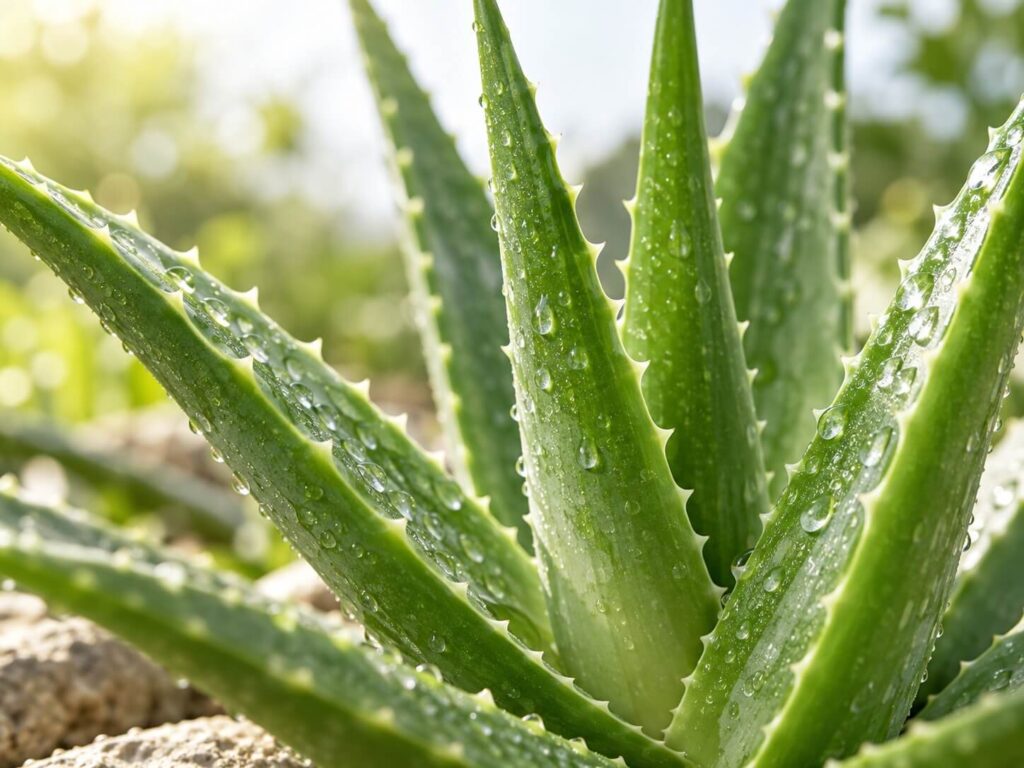
Fleshy leaves store water; botanical identity is only the first part of an ingredient specification
03 / FORMS & VARIANTS
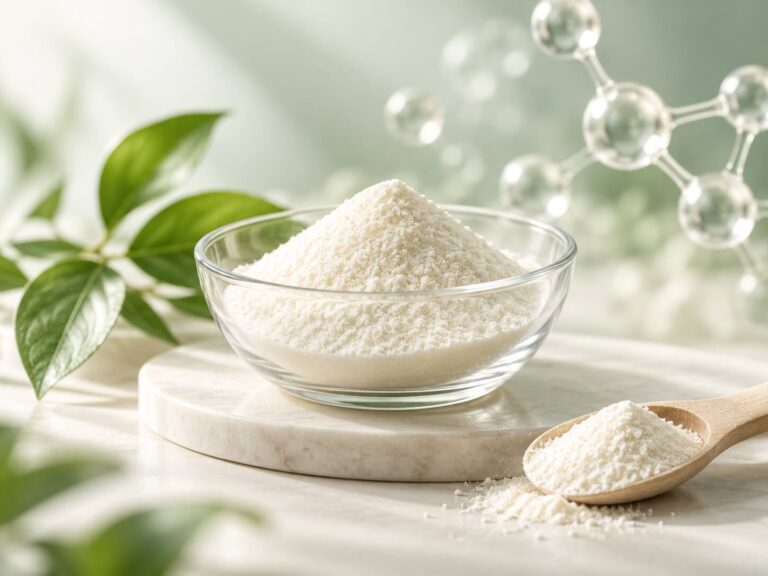
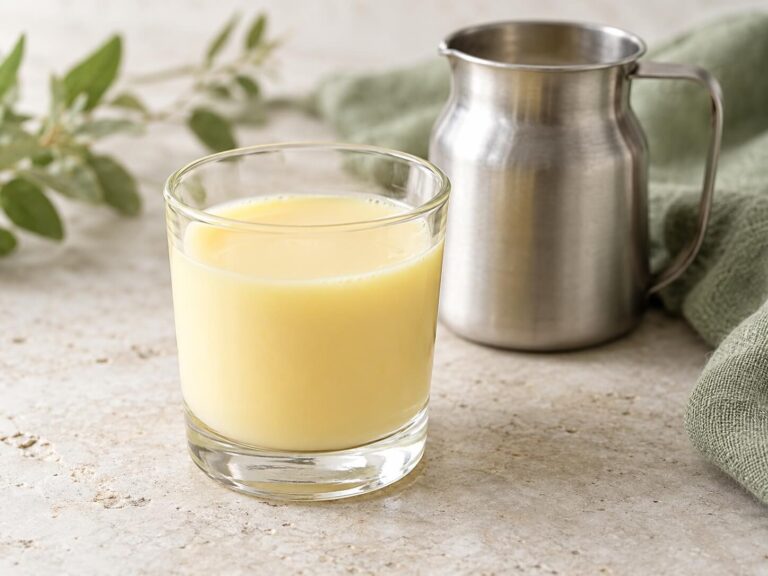
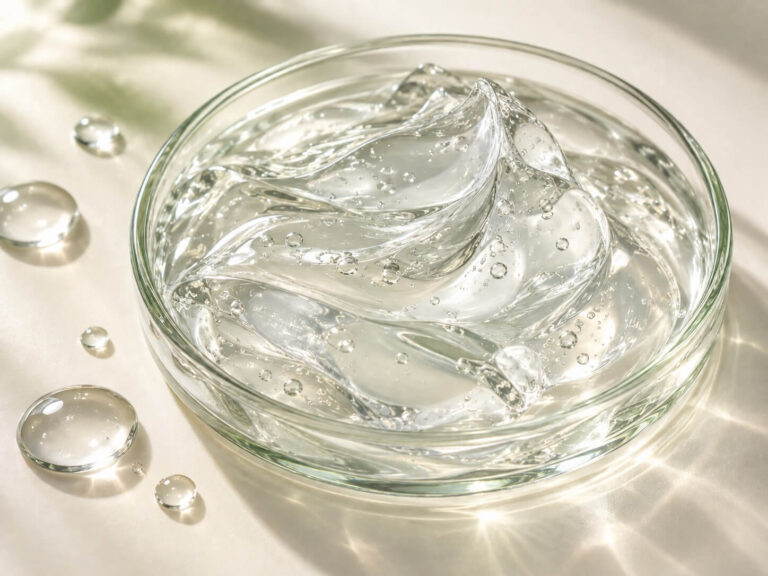
Aloe vera gel, juice, extract and powder: the differences
Gel
Translucent inner-leaf material
Juice
A liquid preparation
Powder
A dried ingredient
Extract
An extracted preparation
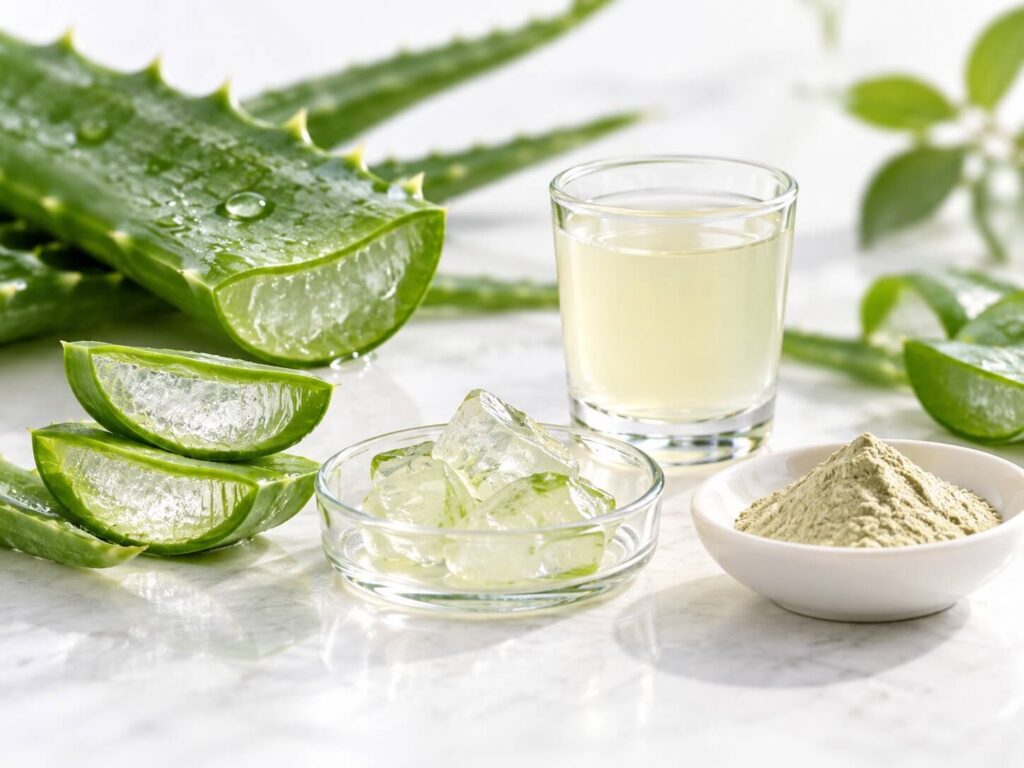
A visual illustration of formats; appearance does not establish composition.
|
Term |
What it describes |
What to check |
|---|---|---|
|
Inner-leaf gel |
Material from the translucent inner tissue. |
Purity, preservation and intended use. |
|
Juice |
A liquid preparation; naming varies by context. |
Plant part, processing and added ingredients. |
|
Whole-leaf extract |
A preparation starting with the whole leaf. |
Decolourisation and residual hydroxyanthracene testing. |
|
Extract |
Material obtained through an extraction process |
Extraction details, concentration and specification. |
|
Powder |
A dried ingredient, sometimes with a carrier. |
Reconstitution basis and actual aloe solids. |
|
Cosmetic gel |
A finished formulation with a gel texture. |
Complete ingredient list and skin-use directions. |
These names are not interchangeable measurements of strength. Comparing a powder percentage with a liquid-gel percentage without knowing water content and reconstitution gives a misleading result. Texture is also unreliable: a thick finished gel may owe its consistency partly to formulation ingredients.
04 / WHERE ALOE VERA IS USED
Typical applications
Cosmetics and skincare
Aloe-derived ingredients appear in moisturisers, cleansing products, after-sun preparations and gels. Cosmetic labels may use botanical ingredient names such as Aloe Barbadensis Leaf Juice. The precise ingredient matters; a juice, extract and powder are not identical specifications.
A finished product’s performance depends on the whole formulation, including its moisturising ingredients, preservatives, fragrance and texture. A high aloe percentage cannot substitute for appropriate finished-product evidence.
Foods, drinks and supplements
Processed aloe vera ingredients are used in drinks and supplements. Their composition depends on the preparation, dilution and other ingredients. A cosmetic gel is not a food, and the word “gel” does not mean that a product is suitable for swallowing. Follow the intended use on its label.
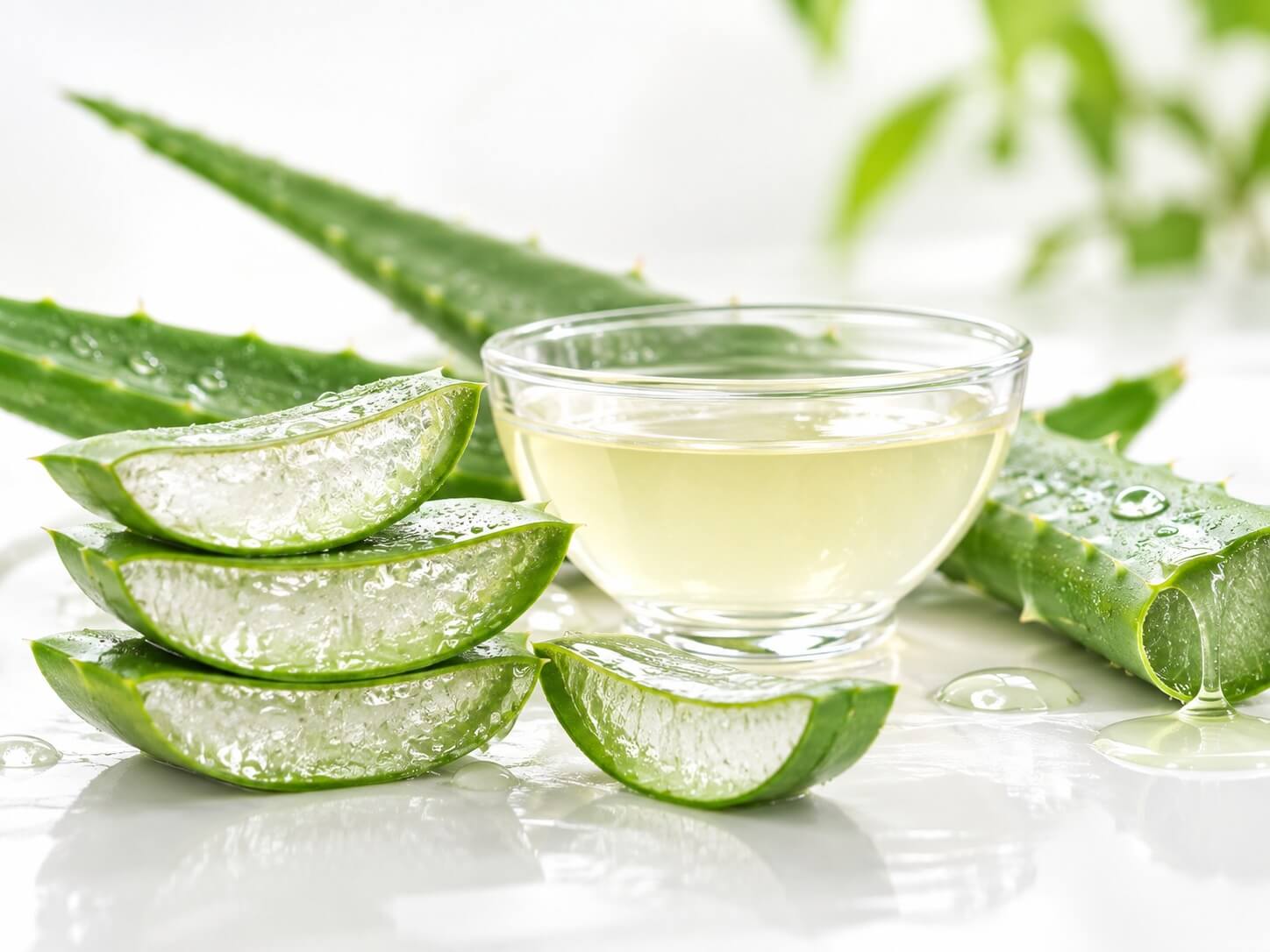
Appearance alone does not identify composition or suitability for drinking.
05 / READING THE EVIDENCE
What does scientific research show?
Research ranges from experiments on isolated substances to clinical trials of specific formulations. These answer different questions. A cell experiment may suggest a mechanism; it cannot establish an effective oral dose or predict the performance of a shop-bought cream.
Burns and wound healing
A 2024 systematic review included nine randomised trials of aloe vera preparations for burns. Six contributed healing-time data; pooled results suggested healing about 3.8 days sooner than with comparator topical treatments. However, the analysis did not find statistically significant differences in pain or infection risk. This is not proof of equal safety or effectiveness for every formulation.
The review concerns burn treatment, particularly second-degree burns, rather than everyday skincare. An older Cochrane review found insufficient high-quality evidence across acute and chronic wounds. Its searches extended only to 2011, so it should not be presented as a complete account of newer burn research. Different wound types, preparations and comparators help explain why conclusions differ.
Oral use and blood glucose
A 2016 meta-analysis included five trials involving 415 participants with prediabetes or early untreated diabetes. It reported improvements in some glucose measurements, but the authors considered the findings inconclusive because studies were few and of poor quality; safety evidence was limited.
The trials lasted 6–12 weeks and used different preparations: examples included 0.2 g daily of a powder and 1 g daily of capsule material. Those weights are not interchangeable doses of a standardised ingredient. These findings do not establish a daily aloe dose for healthy people or justify replacing diabetes treatment. They also cannot be transferred to an LR drinking gel merely because it contains aloe.
Digestion, “detox” and immune claims
There is insufficient reliable evidence to establish aloe as a treatment for irritable bowel syndrome or ulcerative colitis. A laxative effect from latex does not demonstrate healthier digestion or removal of unspecified “toxins”.
Acemannan is studied in experimental immune and tissue-repair systems, including specialised biomaterials. Those applications differ substantially from drinking a processed aloe vera beverage. Laboratory findings do not establish a general “immune-boosting” effect for commercial aloe products.
Research is separate from authorised claims
Scientific publications do not themselves authorise food health claims. EU and Great Britain claims systems must be considered separately. The European Commission also identifies botanical claims whose assessment or consideration is unfinished; this is not equivalent to authorisation. This guide makes no authorised health claim for aloe itself. Any nutrient claim on a formulated product must relate to the named nutrient and meet the applicable conditions.
Quality characteristics: what is useful to compare?
Begin with identity and intended use, then examine the specification rather than relying on a large front-label percentage.
Acemannan measurements can help characterise material, but they do not provide a universal clinical ranking. Similarly, certification only establishes what its scheme actually checks; it is not automatic proof of a health benefit.
Safety and limitations
On the skin
Topical aloe vera gel is generally tolerated, although burning, itching, rash and eczema have been reported. Stop using a product that causes a reaction. Evidence concerning treatment preparations should not be used to justify applying a cosmetic gel to a serious burn or open wound.
When taken orally
Aloe latex can cause abdominal pain, cramps and diarrhoea. Oral leaf extracts have also been associated with reports of hepatitis. Risks depend on the preparation; they should neither be attributed indiscriminately to all aloe products nor ignored because something is “natural”
EFSA’s 2018 assessment raised genotoxicity concerns potential damage to genetic material about certain hydroxyanthracene derivatives and could not establish a safe daily intake. Non-decolourised whole-leaf extract is also distinct from purified inner-gel preparations in toxicology discussions. These findings make material identity and residual-compound control important.
Some short-term oral-gel studies provide reassuring findings, but do not establish universal long-term safety. Discuss oral aloe use with a health professional during pregnancy or breastfeeding, or when taking medicines. NCCIH specifically notes concerns about aloe latex overuse with cardiac glycosides such as digoxin.
Home filleting or rinsing does not verify residual aloin or microbiological quality. This guide therefore does not provide instructions for preparing a homemade aloe drink.
Frequently asked Questions
THE ESSENTIAL POINT
Key takeaweys
Aloe vera supplies several distinct materials, not one standardised ingredient. Inner-leaf gel, latex and whole-leaf preparations differ, while commercial juices, powders and cosmetic gels require further explanation. Processing and testing help define what a product actually contains. Human research offers some promising findings, particularly in specific burn-treatment settings, but does not support transferring every result to everyday skincare or drinks. Oral safety depends on the preparation, and latex-associated compounds deserve particular attention. For meaningful comparisons, prioritise plant part, intended use, concentration basis, documented quality and finished-product evidence over broad claims or headline percentages.
Aloe vera in LR product categories
LR’s aloe vera range includes drinking gels and topical care products, including the ALOE VIA range. LR identifies inner-leaf Aloe barbadensis Miller material as the source for its drinking gels. These serve different purposes and should be assessed separately. For any individual product, use its current country-specific ingredient list and directions to establish the aloe preparation, other ingredients and intended application.
This ingredient guide provides background for future drinking-gel comparisons and skincare articles. It does not establish the effectiveness of an LR formula or attribute a particular extraction, filtration or drying method to LR.
Drinking-gel comparison
Formula differences, flavour and serving information.
Individual drinking gels
With Product-specific labels and intended use.
Aloe Vera skincare
Formula differences, flavour and serving information.
This article is provided for general informational purposes and does not replace professional medical advice.